How Many Guests Fit at a Round Table? Sizes, Spacing and Linen Guide
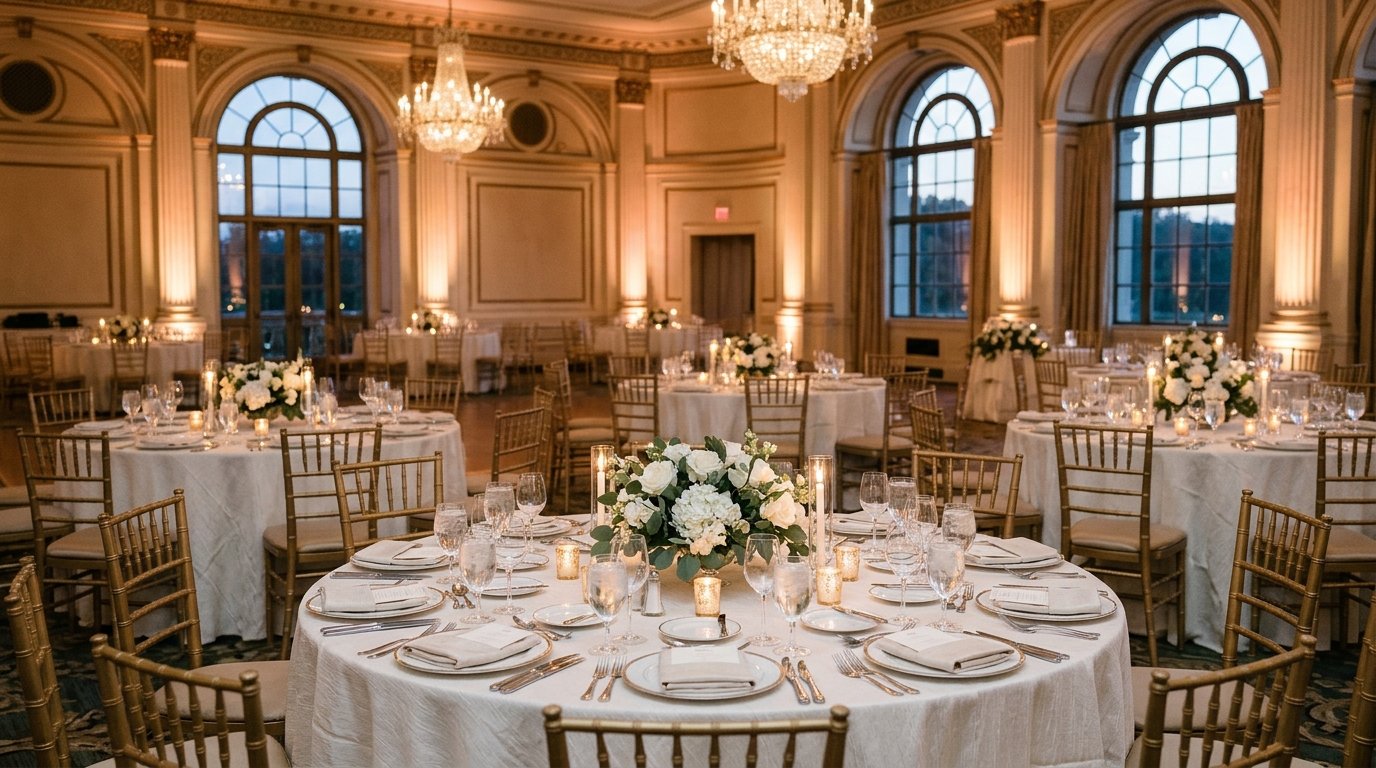
It is one of the most common planning mistakes: the hire company sends a quote for twelve round tables, the seating chart says ten guests per table, and on the day the chairs are knocking together, the centrepieces are crowded out and nobody can reach the bread. Round tables are the default for weddings, galas and family celebrations because they are sociable and easy to lay out, but how many people actually fit depends on the table diameter, the chairs, the place settings and how long guests will sit. This guide gives you the numbers, a simple formula and a checklist to use before you confirm a hire order.
Watch more on TikTok and Instagram (@eventory.store).
The short answer: seats per round table size
Most hire companies stock four round table sizes. The figures below assume standard banquet chairs about 45 cm wide and a normal three-course place setting.
| Table diameter | Comfortable | Maximum (tight) | Typical use |
|---|---|---|---|
| 4 ft / 122 cm | 6 | 8 | Small family tables, cocktail-style dinners, children’s tables |
| 5 ft / 152 cm | 8 | 10 | The standard wedding and gala round |
| 5.5 ft / 168 cm | 9 | 10–11 | When you want ten guests without the squeeze |
| 6 ft / 183 cm | 10 | 12 | Large venues, buffet service, fewer tables overall |
“Comfortable” means each guest has roughly 60 cm of table edge. “Maximum” means around 48–50 cm, which works for a short buffet lunch but feels cramped across a four-hour plated dinner with speeches.
The formula behind the numbers
You do not need to trust a chart. Take the table’s circumference and divide it by the space each guest needs:
Guests = (3.14 × table diameter) ÷ space per guest
- 60 cm per guest for a seated dinner with full place settings.
- 70–75 cm per guest if you are using chargers, wide chiavari or upholstered chairs, or chairs with arms.
- 48–50 cm per guest as an absolute minimum for short, informal meals.
Worked example: a 152 cm table has a circumference of about 477 cm. At 60 cm per guest that is 7.9, so eight guests. At 50 cm it is 9.5, so ten is possible but only with slim chairs and simple settings. If the venue has given you oversized padded chairs, drop to seven or move to 168 cm tables.
What changes the real capacity
Chairs
Chair width matters more than most people expect. A slim folding or chiavari chair is about 40 cm wide; an upholstered banquet chair can be 50 cm; a chair with arms can be 60 cm. Ask the hire company for the seat width and check it against the table edge you have per guest.
Place settings and centrepieces
Chargers, two wine glasses, a water glass, a side plate and a menu card all take space. A wide low centrepiece also pushes glasses and bread baskets outwards. If you plan generous florals, budget for one fewer guest per table or a larger diameter. Keep centrepieces either below about 30 cm or raised above about 60 cm on a stand so guests can see each other across the table.
Length of the meal
A 45-minute buffet lunch tolerates tight seating. A wedding breakfast with speeches, where guests sit for three to four hours, does not. The longer people sit, the more space they need.
Accessibility
For a guest using a wheelchair, remove one chair and allow about 90 cm of clear table edge. Highchairs for babies need roughly the same space as an adult chair. Mark both on your seating plan before you finalise numbers.
How many tables do you need?
Divide your confirmed guest count by your seats per table and always round up. Then add any special tables separately: a top table or sweetheart table, a children’s table, and sometimes a table for the photographer and band if they are eating during service.
Example: 120 guests at 5 ft rounds.
- At 8 per table: 120 ÷ 8 = 15 tables.
- At 10 per table: 120 ÷ 10 = 12 tables.
Three fewer tables means three fewer cloths, centrepieces and table numbers, which is why couples are tempted to squeeze in ten. The trade-off is comfort and service: waiting staff need room to reach every place to serve and clear. If the budget is tight, a better compromise is 5.5 ft tables at nine or ten guests each. Our guest and seating planner does this arithmetic for you and shows the effect of each table size.
How much floor space round tables take
The table is only part of the footprint. Each round needs room for chairs pushed back and a walkway behind them.
- A 5 ft round with chairs occupies a circle about 3 m across. A 6 ft round needs about 3.3 m.
- Leave at least 1.5 m between table edges so two seated guests back to back still leave a gap to walk through. Main service aisles should be wider, around 1.8 m.
- As a rough planning figure, banquet rounds use about 1 to 1.2 m² of floor per guest, before you add a dance floor, bar, buffet, stage or band.
Measure the room yourself rather than relying on the venue’s maximum capacity, which often assumes theatre-style rows or a standing reception. Our venue site visit checklist lists what to measure, including pillars, fire exits and doors that must stay clear.
Linen sizes for round tables
A standard table is about 76 cm (30 in) high. For a cloth that falls to the floor, add twice the height to the diameter:
| Table | Floor-length round cloth |
|---|---|
| 4 ft / 122 cm | 108 in / 274 cm |
| 5 ft / 152 cm | 120 in / 305 cm |
| 5.5 ft / 168 cm | 126 in / 320 cm |
| 6 ft / 183 cm | 132 in / 335 cm |
For a shorter drop over a coloured underlay, a cloth about 60 cm larger than the table gives a neat 30 cm overhang. Confirm the exact table diameter with the hire company, because some “5 ft” tables are actually 150 cm and some 5.5 ft tables are sold as 66 in.
Before you confirm the hire order
- Confirm the final guest number after the RSVP deadline, not before. Add 3–5% spare chairs for last-minute guests and breakages.
- Ask for exact sizes: table diameter in centimetres, chair seat width, and whether the tables are folding or fixed-leg.
- Check access: doors, lifts and stairs at the venue. Large rounds sometimes arrive as two halves or with folding legs for this reason.
- Clarify what is included: delivery, set-up, collection, cleaning and a damage waiver are often charged separately.
- Match linen to the real table using the table above.
- Do a mock layout: put one table and the actual chairs in a room and sit at it with the full place setting if you can. Ten minutes of testing beats guessing.
- Share the floor plan with the venue, caterer and florist so everyone works from the same numbers.
If you are keeping everything in one place, the Wedding Planning Binder includes seating and supplier pages, and our event planning timeline shows when to book furniture hire and when to send final numbers.
Round tables or long tables?
Rounds make conversation easy and are simple to fill, but they use more floor area per guest. Long banquet tables of 6 ft or 8 ft trestles seat more people in the same room and suit family-style sharing platters, but guests mostly talk to the people beside and opposite them. Many venues combine the two: long tables down the centre, rounds around the edges. Whichever you choose, the same rule applies: about 60 cm of table edge per guest for a seated dinner.
FAQs
Can I seat 10 at a 5 ft round table?
Yes, but only with slim chairs, simple place settings and a modest centrepiece. For a long plated dinner, eight is more comfortable. If you need ten, ask for 5.5 ft tables.
How many people fit at a 6 ft round table?
Ten comfortably and up to twelve at a squeeze. Twelve works for buffets and informal dinners; for formal service, ten is better.
Are 60-inch and 5 ft tables the same?
Yes, 60 inches is 5 ft, roughly 152 cm. Hire companies in the UK often list both imperial and metric sizes.
How many spare chairs should I order?
Add 3–5% to the final guest count, plus any chairs for suppliers who will eat on site.
What size cloth fits a 5 ft round table?
A 120-inch (305 cm) round cloth gives a floor-length drop on a standard 76 cm high table.