Floating Candle Centrepiece: Materials, Steps, Costs and Venue Safety
A floating candle centrepiece is one of the cheapest ways to make a long table look finished. A glass vessel, clean water, a few floating candles and something to sit underneath them: that is the whole idea. Done well it reads as calm and expensive; done badly it means wax on the linen, candles that drift into one clump and a venue manager asking you to blow everything out before the speeches. This guide covers the materials, the step-by-step build, realistic costs and the safety rules most venues will hold you to.
Watch more quick decor builds on TikTok and Instagram.
Why a floating candle centrepiece works
Floating candles sit low, so guests can see and talk across the table. The water multiplies the light, which means fewer candles give a stronger glow than the same number of pillar candles. The look also adapts to almost any palette: clear glass and white candles for a classic wedding, smoked glass and amber tones for an autumn dinner, or a few olive leaves under the water if you are following our olive green styling guide.
The other advantage is preparation time. Once the vessels are clean and the water is measured, each centrepiece takes two or three minutes to assemble on site. For a 15-table wedding that is a job one person can finish in under an hour.
Materials for one floating candle centrepiece
- A glass vessel: a cylinder 15–25 cm wide and 20–40 cm tall, or a low bowl 25–30 cm wide. Straight sides look cleaner than curved ones and are easier to light.
- Floating candles: unscented, 5–8 cm wide. Plan on a burn time of at least five hours so they last from the drinks reception to the last dance. Unscented matters: scented candles compete with the food.
- Clean water: filtered or tap water left to stand, so you avoid bubbles clinging to the glass.
- Something underneath: river stones, glass pebbles, sliced citrus, cranberries, eucalyptus sprigs or a single orchid stem. Keep organic material fully submerged so it does not touch the flame.
- A long lighter and a small jug for topping up water.
- A tray or charger plate under the vessel to protect the linen and catch any drips.
Step-by-step: building the centrepiece
- Clean the glass properly. Wash, dry and polish with a lint-free cloth. Fingerprints and water spots are the first thing guests notice when a candle is lit behind them.
- Add the base layer. Place stones or fruit first, then any greenery. If you use flowers, weigh the stem down with a stone so it stays under the surface.
- Pour the water slowly. Fill to about 5 cm below the rim. The gap protects the flame from draughts and stops splashes when someone knocks the table.
- Float the candles. One candle per 8–10 cm of surface width is a good rule: one in a narrow cylinder, three in a 25 cm bowl. More than that and they cluster into a single blob of flame.
- Trim and test. Trim wicks to about 5 mm and light one test candle at home with the exact vessel you will use. Check how high the flame sits relative to the rim.
- Light late. Light candles 10–15 minutes before guests sit down, not during set-up, so you do not lose burn time.
Three layouts that work on real tables
Round tables
One wide bowl in the centre, or a trio of cylinders at different heights. On a 150 cm round for eight to ten guests, the trio leaves room for bread baskets and wine. Our guide to how many guests fit at a round table explains the space each setting needs.
Long banquet tables
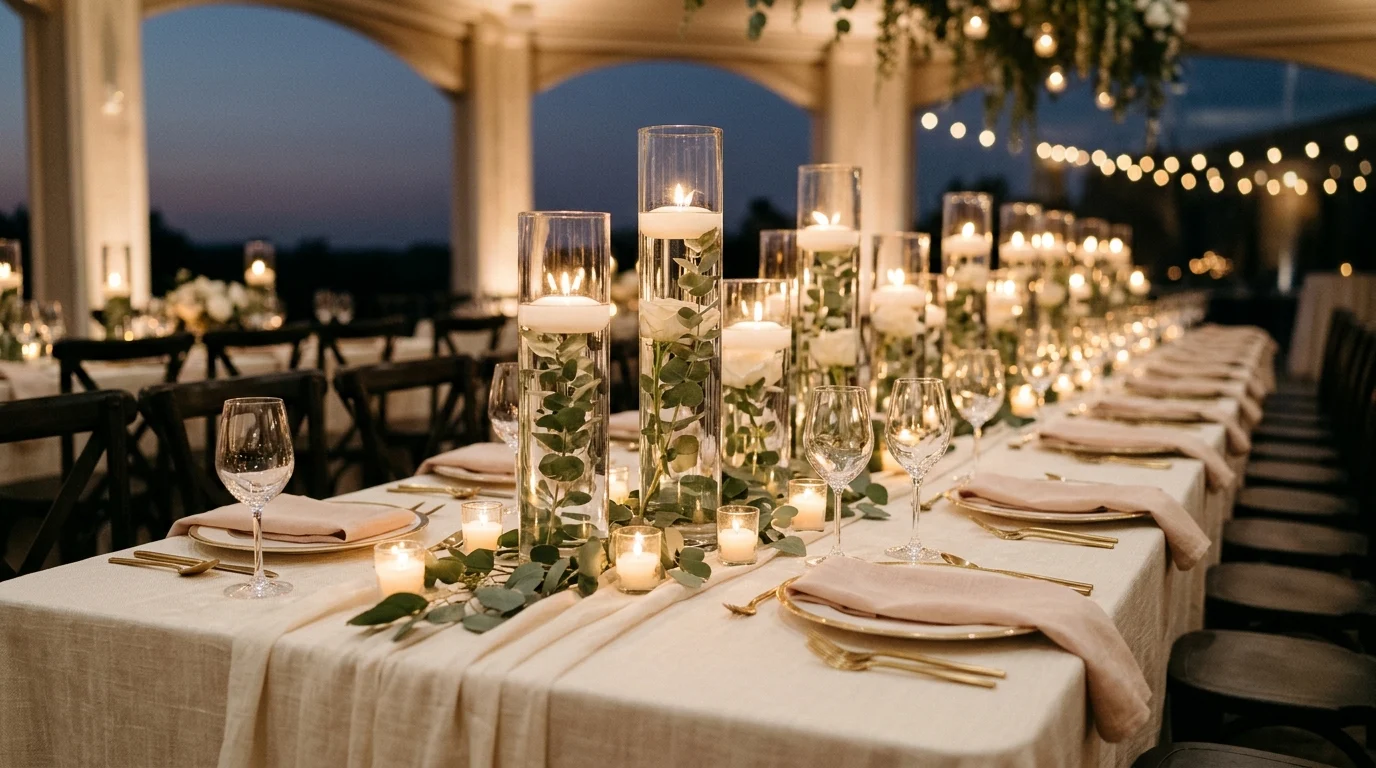
Run a line of low cylinders every 60–80 cm along the centre, alternating with bud vases or small greenery. Keep everything below eye level so guests can still talk across the table.
Head table and welcome table
These are photographed most, so they deserve the tallest cylinders and the cleanest glass. A single tall cylinder with a submerged stem looks deliberate rather than sparse.
Colour and theme variations
The base layer is where you match the centrepiece to the event. A few combinations that photograph well:
- Classic white wedding: clear glass, white candles, white orchid or gardenia heads submerged under a layer of clear pebbles.
- Winter or festive dinner: cranberries and rosemary sprigs under the water, with a ring of pine or eucalyptus around the base of the glass.
- Summer garden party: sliced lemons and limes standing on their edge against the glass, with mint leaves floating loosely beside the candle.
- Evening corporate event: smoked or amber glass, black stones and a single candle per vessel for a clean, minimal look that does not compete with branding.
Whatever the theme, keep to two or three colours per table. A centrepiece with too many elements looks busy once the plates, glasses and napkins arrive.
What a floating candle centrepiece costs
Prices vary by supplier, but these ranges are typical for a DIY build bought new:
| Item | Typical cost per table | Notes |
|---|---|---|
| Glass cylinders or bowl | £6–£25 | Cheaper in bulk; hire is often £1–£3 each |
| Floating candles | £2–£6 | Buy 20% spares |
| Stones, fruit or greenery | £2–£10 | Seasonal fruit is cheapest |
| Tray or charger | £0–£5 | Often included with linen hire |
For 15 tables that is roughly £150–£600 if you buy everything, or noticeably less if you hire the glass. Add the figure to our free event budget calculator so décor does not quietly eat into catering.
Venue safety rules for candles
Many venues restrict open flames, and they are the ones who carry the insurance risk. Ask these questions before you buy anything:
- Are open flames allowed at all, and only inside enclosed glass?
- Is there a minimum distance from the flame to the rim of the glass?
- Are candles allowed in a marquee, or only indoors?
- Who is responsible for extinguishing them at the end of the night?
As a rule of thumb, keep flames well below the rim, never leave lit candles unattended, keep them away from hanging fabric and draped linen, and make sure nobody needs to reach over a flame to pass food. Fire-safety organisations such as the National Fire Protection Association publish general candle-safety advice worth reading before a large event. If the venue says no to flames, LED floating candles give a similar effect and are now convincing from a metre away.
Common mistakes to avoid
- Filling to the rim: the flame sits exposed and the water spills when the table moves.
- Using scented candles: twenty of them in one room will overpower the menu.
- Leaving flowers above the surface: petals dry out under the heat and can catch.
- Skipping the test: some candles tip or sink in deep water. Test the exact product.
- Forgetting the clear-up: water-filled glass is heavy. Plan who empties it and where.
Floating candle centrepiece FAQs
How long do floating candles burn?
Most standard floating candles burn for four to eight hours. Check the packaging and choose a burn time longer than your reception.
Can I prepare the centrepieces the day before?
Prepare the glass and base layer the day before, but add water and candles on the day. Standing water collects dust and bubbles overnight.
How many candles do I need?
One per narrow cylinder, or one per 8–10 cm of surface width for bowls, plus about 20% spares for breakages and early burn-outs.
Want more ideas to pair with your candles? Browse our table centrepiece ideas, and if you are planning a wedding, the Wedding Planning Binder includes a décor checklist so nothing on the tables is forgotten.