Plan a Drone Light Show Event Without Permit Headaches
- Why drone light shows are the strategic pick in 2026
- Cost reality check: per-drone and package pricing explained
- Minimum drone counts, visual fidelity, and briefing decisions
- Venue footprint, launch zones & practical site checklist
- Permits, waivers & lead times: getting it right
- Regulatory compliance by country: critical planning factors
- Technical spec primer: RFP requirements for vendors
- Itemized pricing: what legitimate quotes include
- Drones vs fireworks: the objective event planner’s comparison
- Common failure modes & must-have contingency clauses
- Vendor selection scorecard: operational due diligence
- Case studies & sample budget templates
- Post-event KPIs: how to measure and claim real success
- FAQs and booking timeline: the practical cheat sheet
Why drone light shows are the strategic pick in 2026
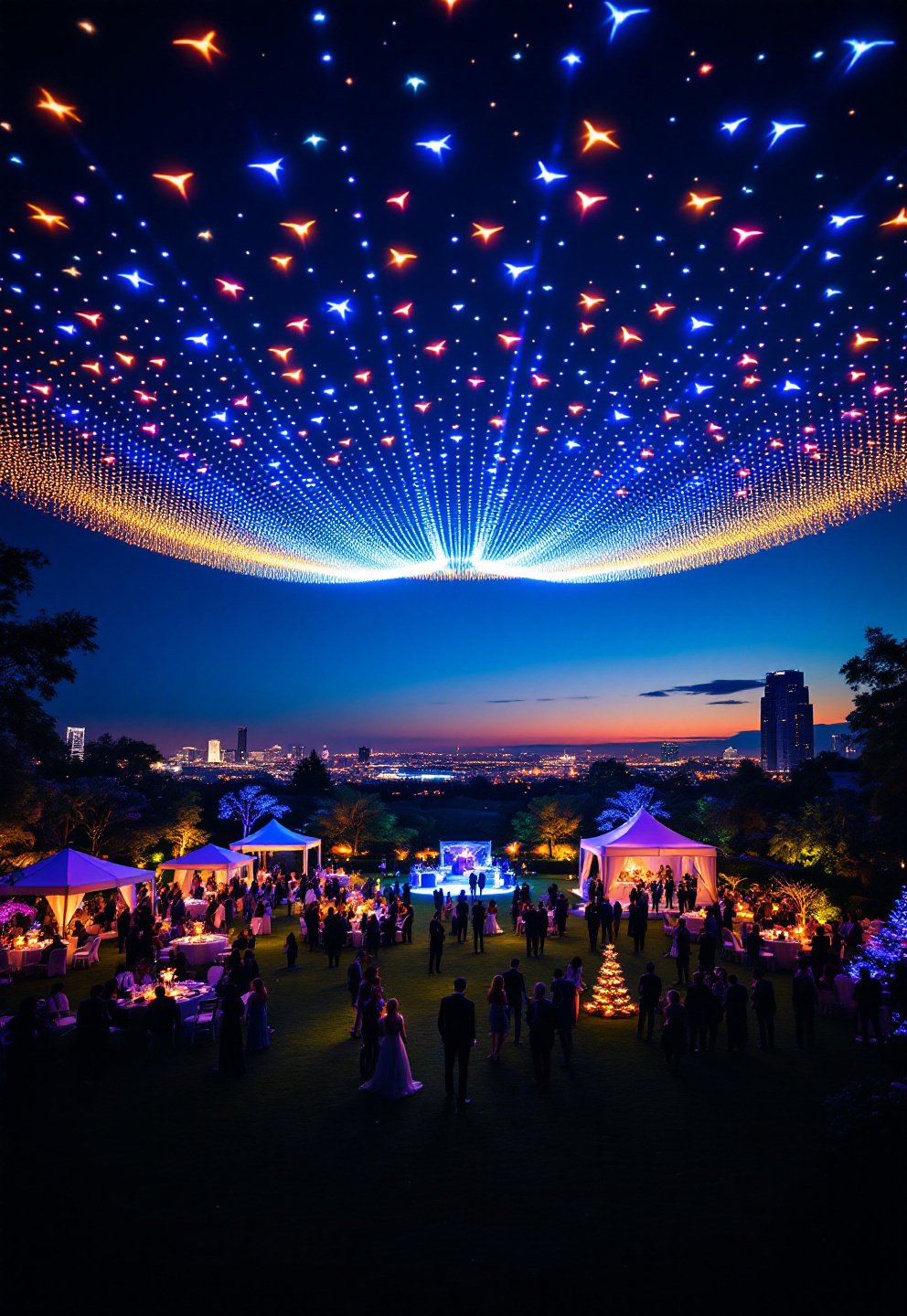
The drone light show event market is outpacing every other live event finale, and planners are noticing. In 2026 the drone light show market is forecast near $9.05 billion, with double-digit growth continuing to 2030 and beyond (source). The surge is driven by demand for green, immersive, programmable spectacle—outdoor drone show entertainment for everything from city festivals to executive summits.
The business case has shifted from “trend” to “standard” for three reasons:
- Eco and safety advantage: Fireworks emit 1.2–2.4 t CO2e per show, drones just ~0.03–0.08 t CO2e. No hazardous debris, very low fire risk.
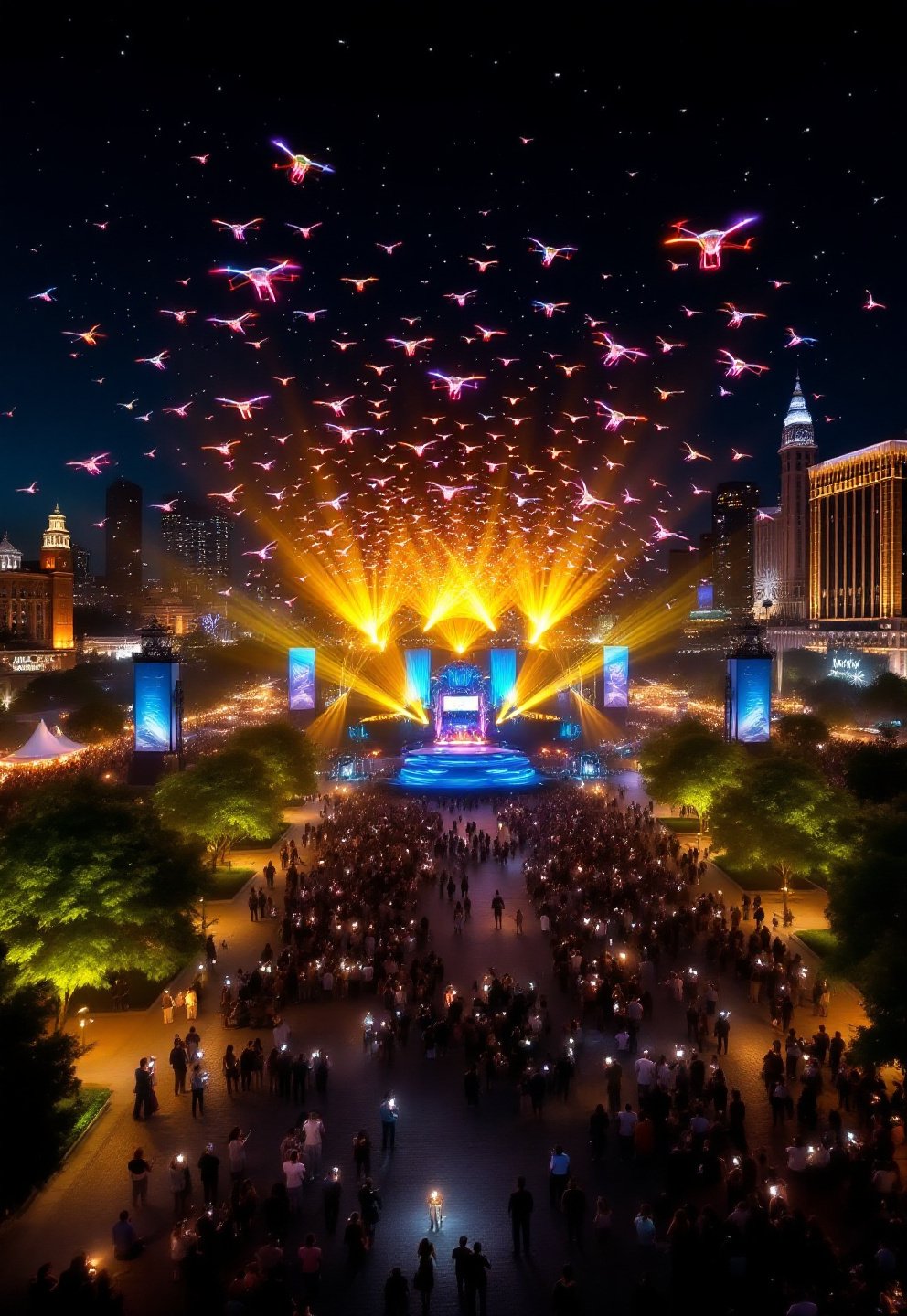
- Brand and social reach: Drones can spell names, animate logos, and create 3D effects—outputting content custom-built for Instagram and press coverage.
- Operations and safety: Cities are increasingly regulating against fireworks and event insurance markets now rate large aerial pyrotechnics as high-risk. Drones sidestep these barriers.
In short: for any spectacle that needs to be green, safe, and immediately shareable, drone show entertainment hire has overtaken fireworks as the strategic headline act.
Cost reality check: per-drone and package pricing explained
Drone display hire price is not one-size-fits-all. Pricing transparency is rare on most vendor sites, but real benchmarks exist:
- Small/entry-level wedding: 20–50 drones, $5,000–$10,000 (or £6,500 for 30 drones with UK vendor FlightShows)
- Mid-range corporate event or private party: 80–150 drones, €9,500–€16,000 or $12,000–$25,000
- Festival or large corporate show: 200–300 drones, $50,000–$75,000 typical; up to $200,000 for custom, city-scale
Professional-grade rates consistently cluster at $175–$300 per drone. Regional averages (2026): North America ~$233/drone, Europe ~$227/drone, China ~$175/drone (for large fleets). For full transparency, ask vendors for line items: fleet, design/choreography, permits, on-site crew, travel, power, and insurance. See below for a breakdown checklist.
Minimum drone counts, visual fidelity, and briefing decisions
Low drone counts mean low resolution—visible gaps, simple shapes only. What counts as “enough” depends on viewing distance and desired visuals:
- 20–50 drones: Good for symbolic “sparkle” at weddings, initials, or simple hearts/animals. Not suitable for detailed logo animation.
- 100–150 drones: Minimum for legible logos/words at close range (<500 m)
- 200–300 drones: Supports crisp images and animations for medium event footprints (up to ~500 m)
- 500+ drones: Needed for stadium/city events or audiences at 1–3 km
For a drone swarm show event tied to branding (corporate or festival), always specify whether logo clarity or narrative sequence is a must. Realistic creative briefs translate directly into the drone count—and thus your budget.
Venue footprint, launch zones & practical site checklist
Not every outdoor venue can support drone spectacle. Before you commit:
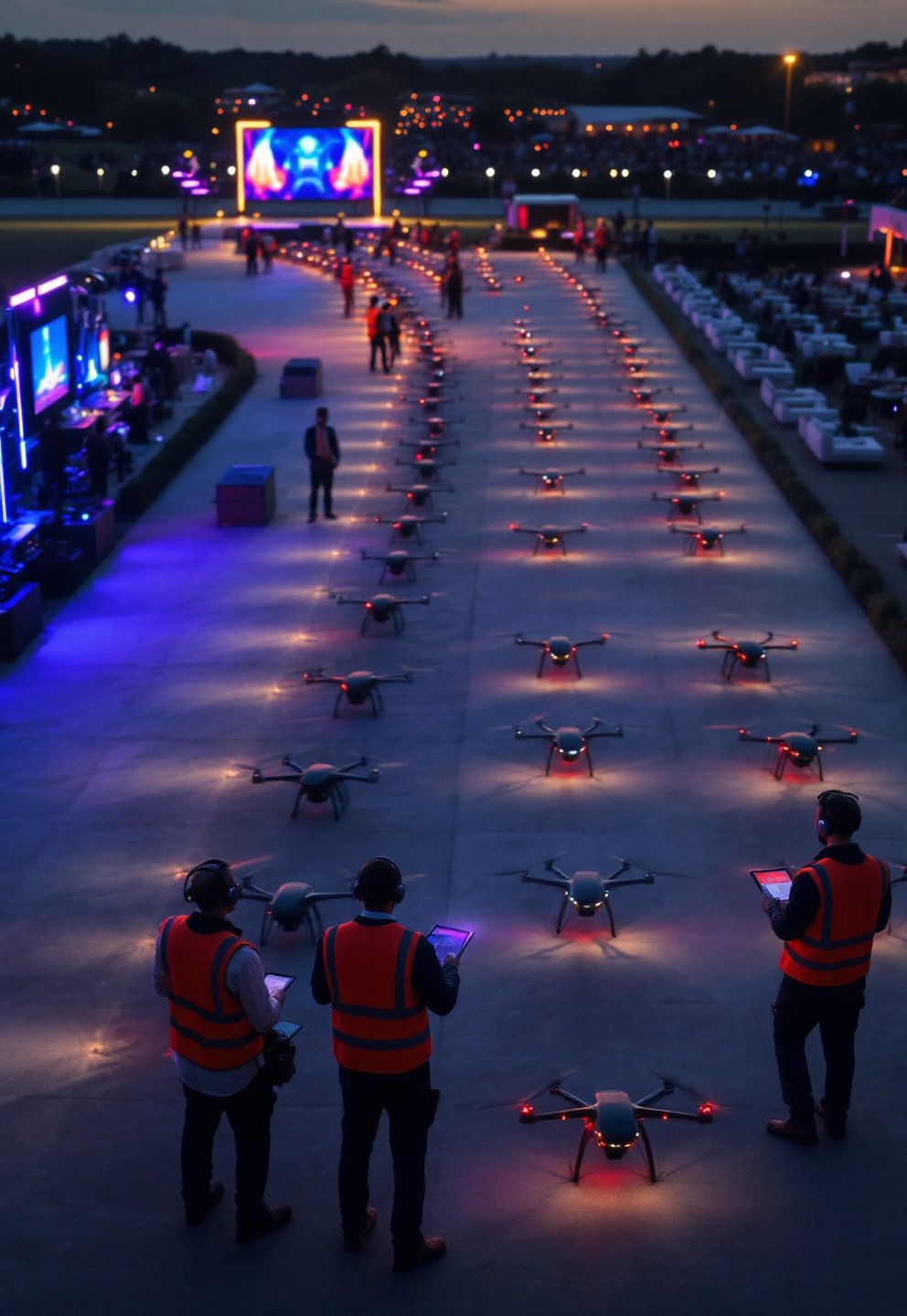
- Launch/landing zone: Level, hard surface: minimum 50 m x 50 m for large shows, 12×12 m for up to 100 drones. Avoid sand and unstable surfaces.
- Spectator buffer: Most vendors require 50–100 m no-go zone around the drone “showbox”—crowds can never be directly underneath in credible operations.
- Total operational footprint: Add buffer and performance space: ~200–300 m diameter, sometimes more in complex terrain.
- Power and access: Secure 220V outlets and clear access for load-in; generator rental is a common extra for remote or festival sites.
- No-fly/restricted zones: Check for proximity to airports, hospitals, listed buildings—these can delay or block approvals entirely.
Key tip: Use a site plan overlay to map safe crowd areas well in advance. If your venue cannot meet the launch/landing or buffer requirements, consider remote launch and streaming, or adapt your headline act. For more site-planning guidance, see our venue checklists.
Permits, waivers & lead times: getting it right
Event planners are routinely caught out by permit timeframes. For all large-scale drone light show events, you’ll need (depending on market):
- FAA waivers (US): §107.29 (night flight), §107.35 (swarm), §107.39 (people), possibly §107.51 (altitude). Apply 30–90+ days before your event—90 days is standard for complex shows. See FAA waiver info.
- City/municipal permission: Some cities (e.g., Santa Monica) demand applications 45+ days in advance.
- Fire marshal signoff and road closure permits (where applicable)
- Aviation insurance certificates: $1–5M typical minimum
- Visual observer/pilot licensing documentation
Europe and UK planners must secure CAA approval, aviation waivers, and confirm drone advertising rules (the UK bans swarm-based overt advertising under section 82 of the Civil Aviation Act 1982). For more detailed permit lists and sample timelines, check our vendor transparency guide and the UK drone code.
Regulatory compliance by country: critical planning factors
United States: Most shows are limited to 400 ft AGL, cannot be flown over people without a special waiver, and require licensed pilots and visual observers. Multi-drone swarms need specific waivers; night flight waivers take up to 90 days for approval. FAA Part 107 summary here.
UK: 50 m minimum safe distance from people; Drone Code applies. Swarm ad shows are restricted. Night ops require green-flashing anti-collision lights on drones.
EU: National agency and EASA compliance; remote pilot certification and risk assessment (SORA style).
Ignore or mishandle any of the above, and your show will be cancelled last-minute by local authorities or your insurance coverage could be void.
Technical spec primer: RFP requirements for vendors
A solid RFP or quote request should ask for:
- Drone fleet make/model, manufacturer, and C-ID (unique compliance identifier)
- Redundant flight control/transmission details (especially for 100+ drone swarms)
- Anti-collision lighting spec, particularly for night ops
- Encrypted communications and RF frequency management protocol
- Weather limitations (max wind, rain, temp ranges—most fleets fly only in <6 m/s winds)
- Visual observer ratios and on-site crew detail (industry: 1 VO per 250 drones at minimum)
These baseline requirements will weed out vendors who “rent” drones for shows but have little operational control—or who cannot secure waivers with their existing hardware.
Itemized pricing: what legitimate quotes include
Legitimate drone show entertainment hire should break out:
- Drone fleet (amortization / per-event wear & tear)
- Choreography, design, and 3D animation (custom vs template)
- Permits and regulatory (actual fees + admin/lawyer time)
- On-site crew (including licensed pilots, visual observers, and support crew)
- Travel and logistics (van hire, accommodation)
- Generators/power infrastructure (if required)
- Insurance (with evidence and named certificates)
Regional vendor averages (2026): $20,000–$200,000 total per show, with per-drone actuals US ~$233, EU ~$227, China ~$175 (for full event). Side-by-side pricing helps you compare apples to apples—avoid “bundle” only quotes with no itemization.
Drones vs fireworks: the objective event planner’s comparison
It’s not just “safety” and “wow factor.” Comparing drone light show vs fireworks reveals:
- Creative: Drone shows animate logos, text, and complex 3D effects; fireworks are limited to color/pattern bursts.
- Environmental: Fireworks release toxic metals (PM2.5 spikes up to 1,200 µg/m³), create event-wide smoke. Drones emit zero particles on-site, with show CO2e per event <5% of fireworks.
- Noise: Fireworks hit 150–175 dB (trauma risk for pets/wildlife); drone shows with music run 60–70 dB—no combustion, no shockwave.
- Cost: 100-drone show ~$18,000–$20,000, medium fireworks $35,000–$60,000. For large events: drones can run higher upfront, but offer unmatched branding/recapture potential via content.
Contemporary crowds and many municipalities now explicitly demand lower-impact finales, especially for eco-focused brands and community festivals. See more on making this choice in our event entertainment trends guide.
Common failure modes & must-have contingency clauses
Drone shows are new—and failures, when they happen, are highly visible. The most frequent negative reviews:
- Fewer drones than advertised: Shows that market “400+ drones” sometimes launch only a few dozen, leading to obvious gaps and angry audiences.
- Unreadable imagery/narrative breakdown: Animations that make no sense unless viewed from drone control itself; poor crowd sightlines.
- Show cuts out early: Entire finales go dark due to technical failures. Promised 20-minute shows last only 7.
- Weather cancellation with no refund or clear notice: Out-of-pocket planners left fighting for payback.
Mitigate this in your contract by requiring:
- Minimum drone count (visible at launch, not just “booked”)
- Guaranteed minimum show duration
- Defined weather/postponement, force majeure, and refund terms
- Communication chain-of-command during event and live contingency plans
Vendor selection scorecard: operational due diligence
Use this checklist when screening drone show entertainment hire:
- Documented operational track record: at least 5 public shows in similar settings (ask for videos and references)
- Current FAA/CAA/EASA waivers for your audience size and locality
- Proof of insurance: policy specifics, $1–5M+ liability, non-owned UAV coverage
- Pilot and visual observer credentials (named staff, not just company)
- Client-side choreography samples at similar drone counts and crowd sizes (not “best-of” highlight reels only)
- Clear site plan and logistics lead (on-site production contact, not just account manager)
The industry average show sizes: North America ~218 drones, Europe ~182 drones, China ~660 drones per performance. Your partner should show experience within your target size.
Case studies & sample budget templates
Here’s a transparent template for immediate copy-paste into your briefs:
- Small wedding: 30 drones, £6,500 (~$8,300); permit timeline 45–90 days; site: 12×12 m launch, 50 m buffer; risk: weather or city permit delay.
- Corporate event: 100 drones, €16,000–$20,000; 90-day waiver lead time (US), site: 25×25 m launch, >50 m buffer; branding embedded. Insist on reference checks.
- City festival: 200–300 drones, $50,000–$75,000 / €35,000+; 2–3 month permit timeline; site: 50×50 m launch pad, 100 m public buffer; risk: airspace restrictions.
Budget for insurance and travel as 10–15% potential add-on, especially for rural/remote venues.
For in-depth corporate planning templates, see our corporate event venue toolkit.
Post-event KPIs: how to measure and claim real success
A drone light show event should deliver more than applause. Build post-show analytics into your RFP:
- Social media impressions: Aggregate posts, tags, and hashtag reach
- Video engagement: Confirmed shares/views of your drone sequence
- Audience NPS: Post-event survey score
- Visibility data: Vendor report on audience footprint and mapped sightlines
Ask vendors to commit to delivering metrics and short recap reports matching your event goals. This is still a content gap in the industry—insist on it.
FAQs and booking timeline: the practical cheat sheet
Can drone shows fly over the audience?
In most countries, drone regulations prohibit flying over people without specific, hard-to-get waivers. Plan your show with at least a 50 m buffer between the drones and the audience for safety and compliance.
How early do I need to start the permit process?
Start at least 60–90 days in advance for large events or any show requiring FAA/CAA/EASA waivers. Municipalities may require documentation 45 days out; check all layers early to avoid date clashes or legal shutdowns.
How many drones do I actually need for a logo or detailed animation?
100–150 drones is the minimum for legible brand shapes at under 500 m viewing distance. Complex, city-scale displays require 200–1,000+ drones; clarify visual goals with your vendor to avoid disappointment.
What happens if there’s bad weather?
Reputable vendors specify cancellation or postponement policies. Most will not fly in heavy rain or wind (>6 m/s); ensure your contract outlines refund or reschedule terms, not just vendor discretion.