How to Book a Corporate Event Venue on a Tight Timeline
Corporate event venue selection today is all about speed, transparency, and technical clarity—because corporate planners have hours, not weeks, to lock the right space before it’s gone. This tactical guide will show you exactly how to evaluate venues on cost, AV readiness, and live availability, so your next off-site or meeting wins fast stakeholder approval.
Key Takeaways
- Venue websites rarely provide the real-time availability, detailed AV specs, or transparent pricing that corporate buyers demand in 2026.
- Top priorities: cost breakdown, minimum technical standards, instant calendar visibility, and clear support/service commitments for hassle-free event delivery.
- Use this guide’s exact checklists, sample budgets, and booking hacks to quickly compare spaces and avoid friction with internal stakeholders.
- Why this matters now for corporate planners
- What corporate programs are actually booking in 2026
- Top pain points planners need fixed today
- AV and connectivity checklist—what to demand
- Typical AV packages and staff—real cost expectations
- Venue pricing & sample budget scenarios
- Real‑time availability, holds, & booking UX
- Service levels, SLAs, & what should be in the contract
- Picking the right venue type: tradeoffs
- Seven critical details most venue pages omit—and what to ask for instead
- The planner pack: documents to request from every venue
- Quick decision matrix for planners
- Conclusion: how to book faster and smarter
- FAQ
Why this matters right now for corporate planners
Corporate events aren’t slowing down: the global events industry is now worth USD 1.0–1.5 trillion (2024–2025), with corporate events making up about 35%—that’s nearly USD 600 billion by 2029, growing at roughly 10.6% CAGR. In-person gatherings have snapped back, and tech-enabled spaces now outperform laggards. If you can’t quickly validate a venue’s cost, AV, and service, you’ll lose stakeholder trust—or the calendar slot itself. Time is money, and a missed window means losing momentum for your conference, off-site, or product launch.
What corporate programs are actually booking in 2026 (in-person, hybrid, experiential)
The old “one-room, one-format” playbook is over. About 70% of corporate events in North America in 2025 are fully in-person, but hybrid demand is strong for investor meetings, product demos, and internal summits. Planners are booking:
- Board meetings and off-sites: need flexible rooms and granular calendar access.
- Multi-track conferences: require robust, segmented Wi‑Fi, breakout options, and scalable AV packages.
- Product launches/tech demos: demand high lumen projectors (see checklist below) and guaranteed bandwidth.
- Client-facing galas: need ballroom scale and full-production AV (not “just a microphone”).
With the corporate event space rental market growing at 10–11% CAGR—much faster than leisure—the spaces that can prove hybrid/hands-on readiness win business. Ignore capacity or AV at your peril; one missing spec means extra RFPs and lost deals.
Top pain points planners need fixed today (availability, pricing transparency, AV reliability)
Most venue complaints in real reviews focus on three blockers:
- Real-time availability: Venues that hide or delay dates force planners to “inquire and wait”—slowing internal approvals or causing decision paralysis. Manual calendars and “request a quote” forms are a conversion killer.
- Opaque pricing: Hidden service charges, surprise AV fees, and unclear F&B minimums make budget signoff impossible. Planners must request detailed estimates in advance—never rely on “starting at” teasers.
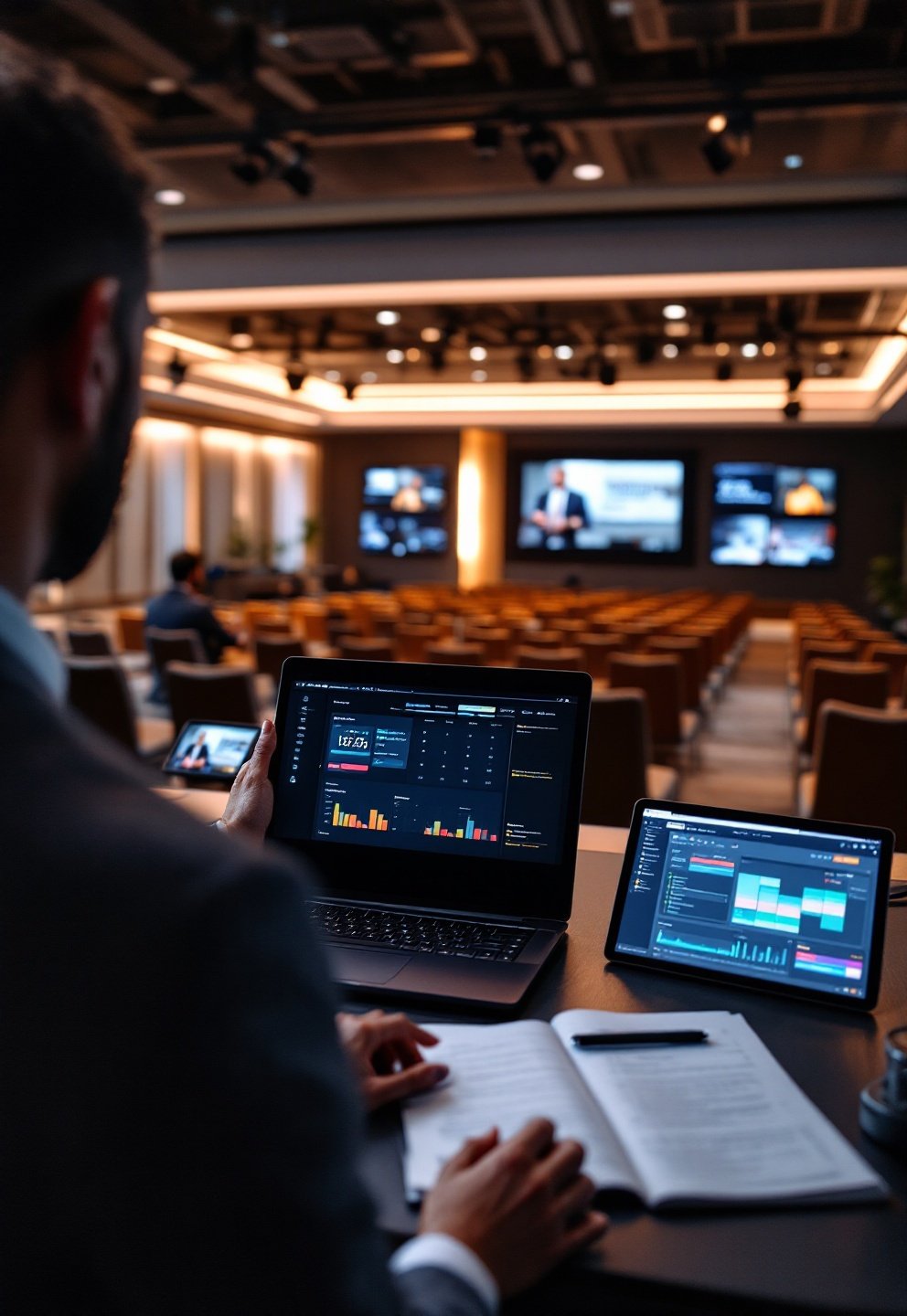
- Outdated or unreliable AV/Wi‑Fi: Corporate buyers now expect at least 6,000–8,000 ANSI lumens, dedicated bandwidth (50–500 Mbps), and on-call techs. Misses here show up as bad event outcomes—and last-minute vendor rushes.
If you’re searching for a corporate event venue near me and the listing won’t show calendar slots or detailed AV, move on—or negotiate hard for upfront, written commitment.
AV and connectivity checklist — specific technologies planners should demand
Bring this technical checklist when scouting an indoor corporate event venue or off-site location. At minimum, demand:
- Projectors: 6,000–8,000 ANSI lumens (1080p+). Top venues provide 4K and modular LED walls for large sessions.
- Audio: wireless mics (handheld and lavalier), distributed sound, DSP for clarity. Specify number of mics by room size and panel type.
- Networking: Dedicated, symmetrical bandwidth (50–500 Mbps per event); document guest vs. secure staff VLAN separation. Ask for proof of redundancy (secondary line or cellular backup).
- Hybrid streaming: At least two camera angles (PTZ or manned), hardware switchers supporting SDI/HDMI, encoder appliances compatible with Zoom/Teams.
- AV staffing: Onsite operator during load-in, rehearsal, and program. Request minimum hours and included hours in writing.
- Documentation: Downloadable AV spec sheet with all installed gear, ceiling points, power circuit diagrams. If not provided, consider this a red flag.
Leading spaces now provide real-time tech specs and infrastructure maps. Don’t settle for less—fast IT checks are now a baseline requirement.
Typical AV packages and staffing — real cost expectations
Cost overruns and “last-minute AV sticker shock” remain a top planner headache. Build your corporate event space rental budget using realistic packages:
- Basic: One screen, one projector, 2–3 wireless mics, basic speaker PA. USD 500–2,500 per room per day.
- Hybrid-ready: Adds streaming gear, camera, basic switching, streaming technician on-site. USD 2,500–8,000 per room per day.
- Full production: Multi-cam, dynamic lighting, full creative support, custom stage builds. USD 15,000–250,000+ per event.
AV Technicians: Typically USD 75–150+ per hour, often with a 4-hour minimum. Insist on written confirmation of hours covered in your contract.
Track your needs and costs with this downloadable sample budget spreadsheet.
Venue pricing & sample budget scenarios by event type and city tier
Let’s put numbers on the table. Here is a quick breakdown for corporate event venue hire in major metros:
| Event Type | Room Rental (USD/day) | F&B Minimum (USD) | AV Package (USD/day) | Per Person (Day Delegate) |
|---|---|---|---|---|
| Small Meeting (20-30) | 500–2,500 | 1,500–6,000 | 500–1,500 | 100–300 |
| Mid-size Conference (50–200) | 2,000–8,000 | 5,000–30,000 | 1,500–7,500 | 150–350 |
| Large Ballroom (250–1,000+) | 5,000–50,000+ | 25,000–150,000+ | 5,000–50,000+ | 200–500+ |
| Off-site Loft/Studio (100–400) | 2,000–8,000 | 2,500–15,000 | 1,000–8,000 | Varies |
| Museum Buyout | 10,000–100,000+ | 5,000–50,000 | 2,000–15,000 | Varies |
Typical venues charge per-day or per-person, with additional labor, cleaning, and service charges. Always secure line-item estimates and attach them to your internal approval decks—review catering best practices here to avoid budget surprises.
Real‑time availability, holds, and best-in-class booking UX (what to demand and how venues actually behave)
Manual RFPs and static forms still dominate the majority of corporate event venue near me searches—but it’s changing fast. Here’s how to get ahead:
- Demand a by-room online calendar so you can instantly check and soft-hold your preferred slot—don’t wait for back-and-forth emails.
- Look for venues or platforms (like Eventective) that support soft holds, clear release policies, and messaging consoles tied to each booking.
- If a venue relies solely on inquiry forms with a 2+ day typical response, escalate to platforms or ask for direct manager contact.
Best-in-class solutions now let you schedule a tech walkthrough, view holds, upload docs, and negotiate contract terms—all from a single dashboard. This is quickly becoming non-negotiable for efficient corporate event venue hire.
Service levels, SLAs and what should be in the contract (tech, rehearsal, incident response)
Never assume standard service—instead, specify these contract elements for any off-site corporate event venue:
- Number of on-site AV techs (and specific support hours per day).
- Guaranteed rehearsal/prep time included at no extra charge.
- Incident response: committed tech dispatch within 15 minutes during program window.
- Inventory of included vs. paid-add-on gear (with model/specification reference).
- Escalation path (specific day-of contact by name).
Use this one-line template: “Please confirm in writing how many AV operators and hours are included in this quote, and your maximum response time for technical issues during our contracted event hours.”
Typical rates: AV techs at USD 75–150+ per hour (minimums vary). Get clarity: lack of definition means you’ll pay premium later for basic coverage.
Picking the right venue type for your event: tradeoffs in flexibility, capacity and tech readiness
Not every indoor corporate event venue is created equal. Consider these tradeoffs:
| Venue Type | Flexibility | Capacity | AV/Tech Readiness | Best Fit |
|---|---|---|---|---|
| Hotel/Resort | Standard layouts; contract constraints (F&B, union vendors) | 50–1,000+ | Strong baseline AV; built-in Wi‑Fi | Conferences, training, sales kickoffs |
| Convention Center | Modular; more flexible, large capacity | Up to 10,000 | Enterprise-grade networks, production partners | Trade shows, product launches |
| Boutique Hotel | Flexible, smaller rooms, aesthetic focus | 20–200 | Limited in-house AV, often external partners | Retreats, board meetings |
| Loft/Studio | Customizable, raw or AV-outfitted | 50–500 | Varies (vet carefully) | Off-sites, brand events |
| Museum | Restricted layouts, high impact | 100–1,000+ | In-house AV or required vendors | Galas, launches |
| Coworking | Modern, plug-and-play, short notice | 5–100 | Hybrid, basic AV; limited for large shows | Workshops, hybrid meetings |
For flexibility and hybrid tech, some off-site venues now offer integrated entertainment and AV options—reducing vendor chaos and last-minute troubleshooting.
Seven critical details most venue pages omit—and what to ask for instead
Even top-ranking venue sites leave buyers in the dark. Here are the seven most important missing elements—and what a good venue should provide:
- Real-time availability & hold rules: Present a live calendar widget, not a generic form.
- Downloadable tech spec & AV maps: Provide PDF sheets with specific model numbers, lumens, input/output diagrams.
- Sample budgets: Share “typical event” cost scenarios in downloadable spreadsheets.
- Service-level definitions: List hours, AV tech count, escalation policy—ideally as a table.
- Network/security architecture: Supply IT documentation for VLANs, bandwidth, privacy compliance, and incident protocols.
- Post-event analytics: Describe what data/planner reporting you can provide (attendance logs, Wi‑Fi usage, engagement zones).
- Sustainability metrics: Show certifications, waste diversion, energy use—attach a fact sheet for ESG compliance.
Venues that readily hand over these assets (ask for a sample tech sheet) are typically the easiest to work with at every price tier.
The planner pack: documents to request from every venue
Before you shortlist any corporate event venue or corporate event space rental, ask for these documents:
- Room-by-layout capacity charts (as downloadable PDF)
- Tech spec sheets (projector lumens, audio wattage, I/O)
- Sample budget/xls with transparent pricing
- Live availability calendar with hold/release policy
- AV staff matrix (roles, hours covered)
- Network SLA and security fact sheet
- Sustainability statement and badges
- FAQ for data privacy, IT, hybrid event support
If these aren’t on the listing, insist on a single “planner pack” download—don’t waste days collecting fragmented details.
Looking for decor or theming inspiration? Our guides on flower wall rental and balloon garland installation offer cost and vendor insights tailored for corporate settings.
Quick decision matrix for planners (one-page rubric)
Use this one-page rubric when comparing corporate event venue hire options. Assign a score (1–5) for each factor per venue:
- Capacity (max and by layout)
- AV Score (specs, hybrid support, tech staff quality)
- Budget Range (total and line-item clarity)
- Calendar/Hold Availability (instant, soft, or manual)
- On-site Tech Support (hours/staff, rehearsal included?)
- IT/Network Readiness (bandwidth, backup, documentation)
- ESG Metrics (sustainability, accessibility)
Download our free decision matrix template to justify your shortlist—faster answers mean more confidence, less “back to square one.”
Conclusion: how to book faster and smarter
Choosing an effective corporate event venue is now about speed—transparent pricing, live calendars, complete tech data, and service-level clarity win every time. Once you find a venue offering a “corporate planner pack” with a downloadable assets bundle, instant soft-hold feature, tech walkthrough scheduling, and a named operations contact, you know stakeholders will actually read your deck and say “yes.” Want a quick-wins checklist or venue comparison tool? Contact us to download the full planner asset kit and secure priority slots before rates go up this quarter.
Need more in-depth decor options for your next event? Check out our guide to hiring an event decorator.
Frequently Asked Questions about Corporate Event Venues
What is the minimum AV spec I should accept for a medium-sized corporate meeting?
At least 6,000 ANSI lumens, 1080p projector (ideally 4K), distributed sound with multiple wireless microphones, and 50 Mbps dedicated bandwidth. Insist on a downloadable AV inventory sheet.
How quickly can I expect to hold or book dates at most venues?
Many venues still respond within 24–72 hours using manual workflows. Best-in-class spaces now allow instant or soft-hold bookings online with integrated calendars, reducing risk of losing your preferred slot.
What are typical hidden fees in corporate event space rental?
Common hidden fees include service charges (20–26 percent), mandatory gratuity, separate Wi‑Fi or power fees, additional AV tech labor hours, cleaning, and overtime setup charges. Get detailed line-item quotes up front.
What are the top contract terms to negotiate for technical support?
Specify number and hours of AV staff included, guaranteed rehearsal/setup time, maximum response time for day-of technical issues, and escalation path. Have these detailed in the signed contract.
How do I justify higher-budget venues to stakeholders?
Use a one-page decision matrix showing higher AV reliability, better tech support, and transparent pricing—demonstrate risk reduction for data security, event success, and attendee experience.