Entertainment Services That Actually Deliver Event ROI
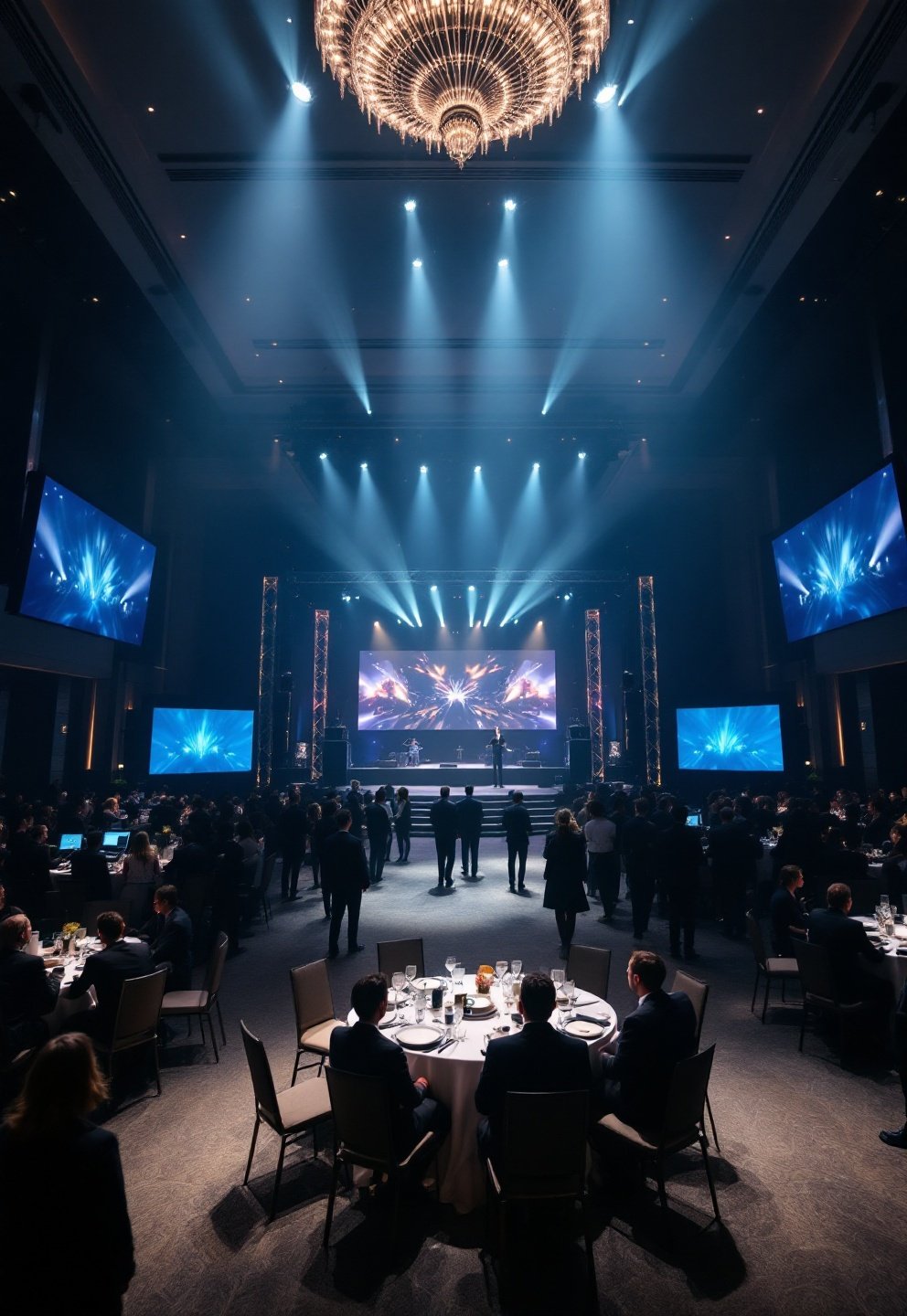
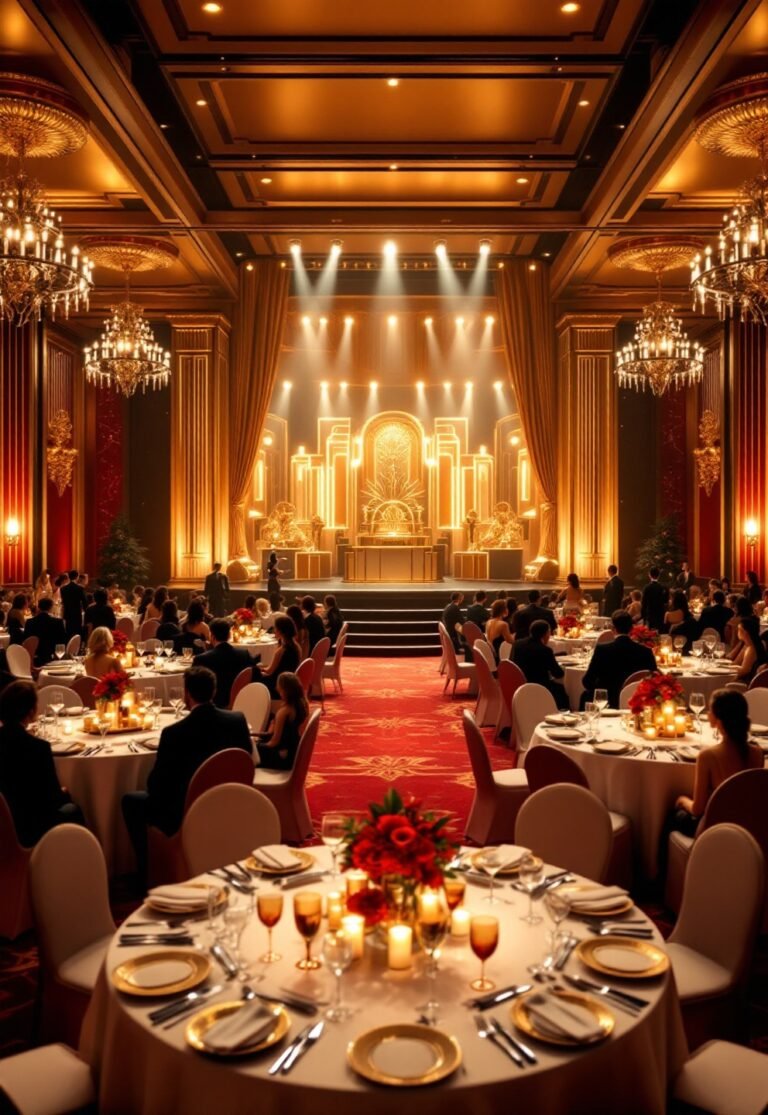
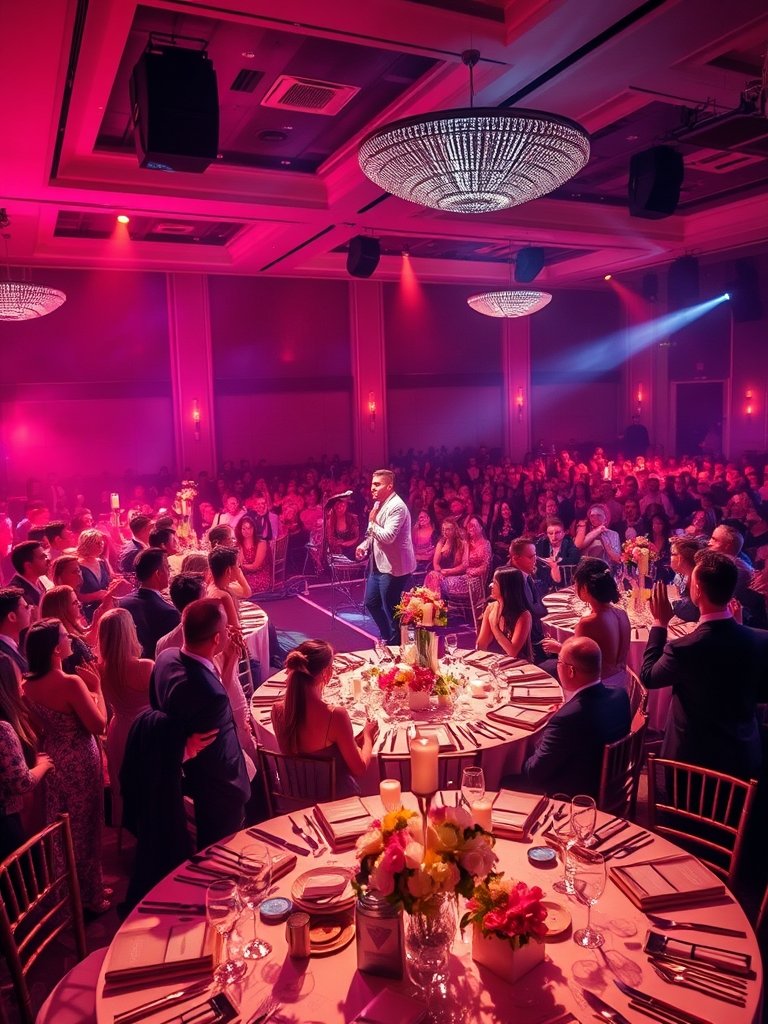
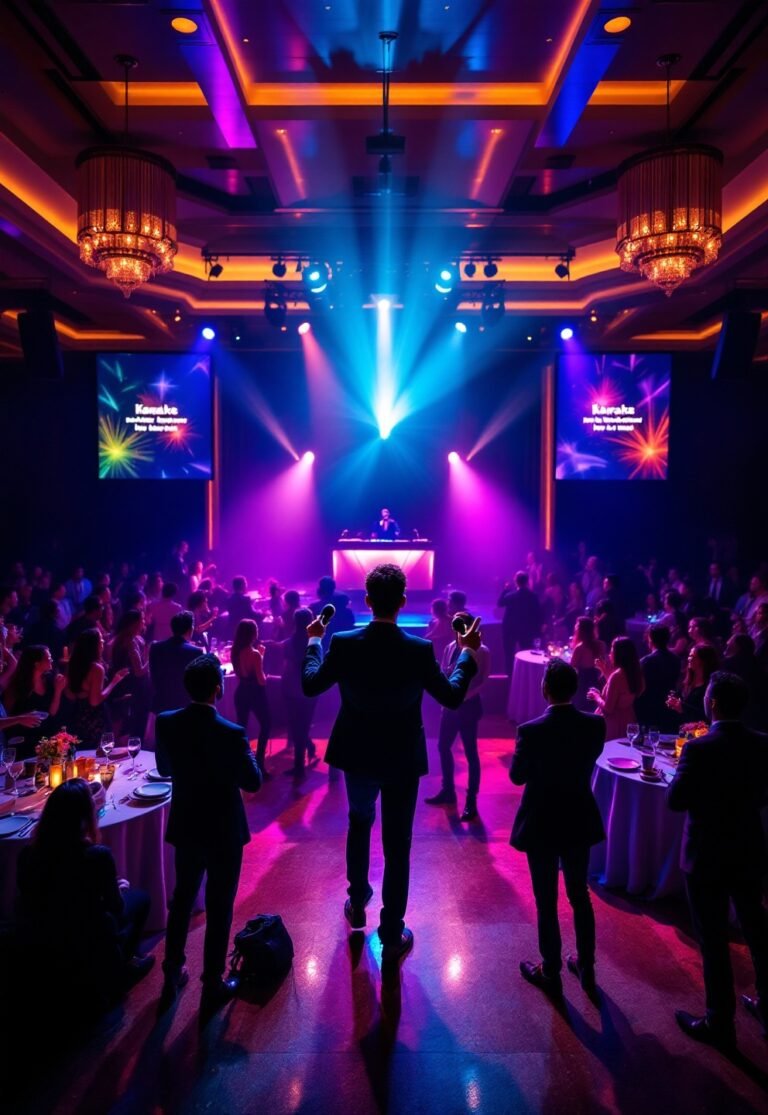
At today’s most effective events, entertainment services are more than an add-on—they’re a measurable driver of ROI, guest engagement, and seamless technical execution. If you manage large corporate meetings, conferences, product launches, or high-end private gatherings, choosing a single full-service entertainment company to handle your talent, AV, and lighting is now a business-critical decision.
Key Takeaways
- Bundled entertainment services reduce technical risk, streamline costs, and deliver clear accountability versus multiple vendors.
- Integrated providers offer scalable, video-first production—positioned to support hybrid and in-person events with measurable ROI.
- Demand for full service entertainment companies is soaring as event budgets and complexity rise through 2026 and beyond.
- Market snapshot — demand and growth for full-service event production (2026 context)
- Why integrated, bundled entertainment + AV + lighting is the strategic choice
- Top pain points when you coordinate separate vendors
- Pricing reality — what the research shows (and what’s missing)
- How to request a meaningful, line‑item package quote (what to ask for)
- Measurable ROI and success metrics to demand from providers
- Competitive landscape signals — what winning providers offer (how to spot market leaders)
- Regional demand & “entertainment services near me” — what affects local availability
- Seven content/service gaps most articles and vendors miss (what to demand instead)
- RFP checklist & sample questions to include (practical next steps)
- Quick comparison: full-service company vs. multi-vendor model (decision guide)
- Next steps for buyers — how to shortlist and evaluate vendors quickly
- FAQ
Market snapshot — demand and growth for full-service event production (2026 context)
Corporate events and live experiences are rebounding, growing in value and complexity faster than ever. According to Mordor Intelligence, the corporate events market will climb from USD 369.65 billion in 2026 to USD 686.49 billion by 2031—a predicted CAGR of over 13.18% in the next five years (source). Meanwhile, PwC expects the global entertainment and media sector to reach US$3.5 trillion by 2029, with nearly US$577 billion in new annual spend by 2029 (source).
For corporate planners, this growth signals not just more events, but more video-driven, hybrid, and production-heavy requirements—demanding bundled solutions that go beyond just entertainment or just AV. HubSpot data shows that short-form video (49%), long-form video (29%), and live-streaming (25%) outperform all other formats for ROI and engagement (source).
Why integrated, bundled entertainment + AV + lighting is the strategic choice
Coordinating professional entertainment services for events, technical AV, and lighting separately no longer makes logistical or financial sense for most sizable programs. Here’s the business case for a single full service entertainment company:
- Single-point accountability: One entity responsible for the complete experience—from show flow and talent to sound, visuals, and technical uptime.
- Reduced risk: Bundled teams have proven processes for integrating staging, audio, lighting, and live-stream or video production—lowering your exposure to tech failure or schedule slips.
- Optimized for hybrid and video-first outcomes: Integrated tech stacks ensure seamless content capture, simulcast, and audience engagement—critical as demand for video ROI accelerates.
- Consistent quality and fewer surprises: From talent and MCs to lighting cues and AV, everything is coordinated for a unified attendee experience.
This means you spend less time chasing vendors and more time measuring event impact.

Top pain points when you coordinate separate vendors
Many planners discover the hard way that splitting entertainment, AV, and lighting causes challenges that bundled entertainment services for corporate events avoid:
- Fragmented accountability: Who owns show flow, cue timing, or troubleshooting? When vendors only manage their niche, gaps emerge fast.
- Integration risk: Staging, sound, and visuals can be misaligned, especially on hybrid or content-heavy programs.
- Redundant overhead: Each vendor requires separate contracts, schedules, rehearsals, and billing. That eats up precious manager time and raises the chance of errors.
- Inconsistent quality: AV vendors optimize technical clarity, while entertainers focus on performance. No one owns the holistic experience unless you insist—and enforce—true collaboration.
As event scale and complexity rise, so does the cost of these divides. Searching for “entertainment services near me” yields many specialists, but few with true end-to-end capability.
Pricing reality — what the research shows (and what’s missing)
Some blogs may offer ballpark costs, but current research finds no published average pricing for bundled entertainment services packages—not for corporate, private, or hybrid events. This is mainly because:
- The range is enormous: Small office parties, conference galas, and large branded events all demand different setups and talent.
- Geography drives rates: Major metro areas command higher fees for talent, labor, and logistics.
- Production complexity multiplies costs: Hybrid streaming, interactive elements, or elaborate sets will increase line-items quickly.
Bottom line: Expect wide variation. Transparent, line-itemized quotes are the only route to an apples-to-apples comparison—especially when choosing a full service entertainment company.
For related event budgeting guidance, see our flower wall rental pricing guide and private catering Nice pricing overview.
How to request a meaningful, line‑item package quote (what to ask for)
Here’s what to insist on when requesting quotes for bundled entertainment services packages:
- Talent fee: Artists, MCs, musical acts, or specialty performers
- Technical production: Producer, showcaller, and project management
- AV equipment: Mics, speakers, projectors, switchers, remote streaming gear
- lighting rig: Washes, spots, uplights, moving heads, and control
- Crew hours: Technicians, camera ops, lighting, staging, streaming crew
- Rehearsal time: Number and duration—critical for integration
- Travel/logistics: For teams or equipment coming from out of area
- Contingency: Backup plans, weather, technical redundancy
- Content capture/streaming: Video recording, live-stream production, post-event edits
Request these as line items to accurately compare true bundled providers versus a la carte specialists. For an event procurement roadmap, see our catering procurement guide and event decorator hiring checklist.
Measurable ROI and success metrics to demand from providers
True professional entertainment services for events should support clear, measurable ROI—not just applause. KPIs to demand in your evaluation:
- Attendance and retention rates: Did integrated entertainment + production drive higher participant numbers and engagement?
- Audience engagement: Poll response, Q&A, virtual participation, social shares
- Lead capture or on-site sales uplift: Measurable impact through event tech integration
- Content capture and replay views: Post-event analytics on video performance and content library activity
- On-time setup and show execution: Was tech ready and were cues followed precisely?
- Participant feedback: Post-event CSAT or NPS for entertainment/production specifically
Leading providers should present examples or references with hard benchmarks against these metrics.
Competitive landscape signals — what winning providers offer (how to spot market leaders)
No major research directly lists the top full service entertainment companies. However, dominant providers tend to offer:
- Experience at event production scale: Proven delivery on multi-hundred or multi-thousand attendee events
- Video-first, hybrid-ready capability: Deep expertise in live-streaming and content capture
- Integrated entertainment + AV + lighting: Single contract, unified team, seamless experience
- Robust case studies: Evidence of measured impact—not just pretty photos
For basic vendor benchmarks, also see our guides for event decorators and event decor near me for local service vetting tips.
Regional demand & “entertainment services near me” — what affects local availability
Most searches for entertainment services near me and entertainment services for corporate events return lots of options in big cities—but supply is uneven regionally. Here’s what matters:
- Corporate-event economy size: North America is biggest overall, but Asia Pacific is growing fastest (source).
- Urban concentration: Event production ecosystems cluster in cities and event hubs—rural areas rely on imported crews/equipment.
- Event format mix: Demand for hybrid or high-production events means more bundled providers nearby; simple events may only find specialists.
- Local production infrastructure: Markets with major venues and talent pools see more bundled offerings and competition.
When searching in new geographies, gauge both local references and the provider’s willingness to travel or scale production crew as needed.
Seven content/service gaps most articles and vendors miss (what to demand instead)
Don’t let your procurement process get derailed by missing details. The most common gaps to watch for:
- Integrated AV + lighting + talent packaging: Always demand unified pricing, crew coordination, and showcalling.
- Measurable ROI metrics: Insist on KPIs like attendance, engagement, and sales—not just “memorable experiences.”
- Hybrid/live-stream capability: Providers should show experience here, not just talk about it.
- Scalability by event size: Can the same team scale for 100 or 5,000 people?
- Budget transparency and line-item structure: See every major service/cost up front.
- Coordination risk and accountability: Document who steps in if anything fails—tech, talent, venue, or otherwise.
- Regional capacity and availability: Can they deliver the same quality in your city—without importing expensive crew from distant markets?
Make these checkpoints explicit in your brief or contract. For more tactical ideas, read our table centerpiece ideas for events and party decoration ideas on a budget for vendor selection tips that apply across categories.
RFP checklist & sample questions to include (practical next steps)
Lock in quality and accountability with a structured RFP. Here’s a quick checklist and key questions specific to entertainment services packages:
- Submit a detailed brief with target outcomes (hybrid event, video capture, live entertainment, etc.)
- Request a full line-item quote (see above for breakdown)
- Ask for technical riders and full event scheduling roadmap
- Verify live-stream bandwidth and platform specs
- Request exact crew ratios (AV/lighting/talent/streaming) for your event size
- Confirm on-site rehearsal availability and execution plans
- Request contingency plans for technical failures or talent illness
- Ask for at least 2–3 case studies with engagement or content metrics (attendance lift, replay views, sales impact, etc.)
- Clarify content ownership and post-event delivery timelines
- Get references rated by event type, size, and format
- Ask about travel/logistics pricing if not local
- Insist on post-event satisfaction surveying and reporting
These ensure you’ll receive a comparable, complete proposal—and avoid “gotcha” charges or quality gaps later. For related vendor vetting questions, see our derame traiteur checklist.
Quick comparison: full-service company vs. multi-vendor model (decision guide)
Not sure if you need a bundled approach? Here’s a side-by-side analysis for enterprise and private event stakeholders:
| Decision Criteria | Full-Service Entertainment Company | Multi-Vendor Model |
|---|---|---|
| Accountability | Single point—owns all show aspects | Fragmented—risk of finger-pointing |
| Integration Risk | Minimal—pre-coordinated, practiced | High—vendors optimize individual scope |
| Scheduling/Coordination | Simplified—one contract, one call | Complex—multiple schedules, invoices |
| Quality Consistency | More stable—one team’s reputation | Variable—service gaps common |
| Hybrid/Video Production | Integrated tech stack, better ROI potential | Often bolted-on or limited by weakest vendor |
| Use Case Best For | Complex, hybrid, or measurable ROI-driven events | Simple, low-stakes, or hyper-local events |
Research indicates entertainment services for corporate events get the best value from bundled firms for complex or hybrid events—but a la carte may suffice for small, in-person gatherings with in-house production support.
Next steps for buyers — how to shortlist and evaluate vendors quickly
Move efficiently and de-risk your decision with this 30/60/90 day plan:
- 30 days: Define your must-have capabilities (entertainment, AV, lighting, live-stream); shortlist only true full-service entertainment companies or trusted local partners.
- 60 days: Request detailed, line-item package quotes (see above); request 2–3 ROI-based case studies with attendee data, content metrics, and showflow timelines.
- 90 days: Schedule site/technical rehearsals at the venue; confirm insurance, backup crew, and contingency plans; finalize all deliverables and payment terms in writing.
Above all, keep budget transparency, hybrid capability, and content metrics front and center—these correlate most directly with successful entertainment services outcomes in the research.
FAQ
How far in advance should I book full service entertainment company packages?
For complex events (especially with hybrid production), aim for three to six months in advance. Simpler packages may be available with a shorter lead time, but top talent and entire production crews often get booked out early, especially in peak seasons.
What should I do if a vendor won’t provide detailed line-item pricing?
Push for transparency. If a supplier cannot break down costs for talent, AV, lighting, and production, it’s a red flag—either they’re not truly integrated or may be adding hidden markups.
How can I measure ROI from entertainment services at my event?
Track attendance, engagement (surveys, polling, audience participation), lead captures, content replay numbers, and satisfaction scores. Bundled providers should help you monitor and report these benchmarks.
What are the most common mistakes when coordinating separate vendors?
The biggest issues are gaps in showflow ownership, integration failures (AV/lighting/entertainment), schedule collisions, inconsistent quality, and finger-pointing if something goes wrong. Bundled solutions minimize these problems.
Do smaller cities have access to high-quality bundled entertainment services near me?
Larger metro areas are best served. However, many full-service firms will travel or scale up for major events in smaller markets. Just expect added logistics costs if your event is in a lower-density region.