How to book a competitive socialising venue without queues
- What is a competitive socialising venue — and why it matters for events
- Market snapshot — growth, scale and why suppliers are investing now
- Why competitive socialising works for corporate team building and private parties
- Top booking pain points organisers face (and immediate fixes)
- The features most venues don’t make obvious — questions to ask before you book
- Typical pricing and booking requirements — realistic ranges and how to read them
- Sample event formats and agendas (templates for 15, 40 and 100 people)
- How to integrate food & drink so the experience feels seamless (operator best practices)
- Safety, age and accessibility: must‑check policies (especially for axe throwing)
- Misconceptions that hurt discovery — how to search and what terms to use
- Common post‑event complaints and how venues (and organisers) should prevent them
- Post‑event follow‑up and measuring success (ROI for corporate organisers)
- Quick booking checklist + 10 sample questions to include in your enquiry email
- Next steps & recommended minimum asks when negotiating a quote
What is a competitive socialising venue — and why it matters for events
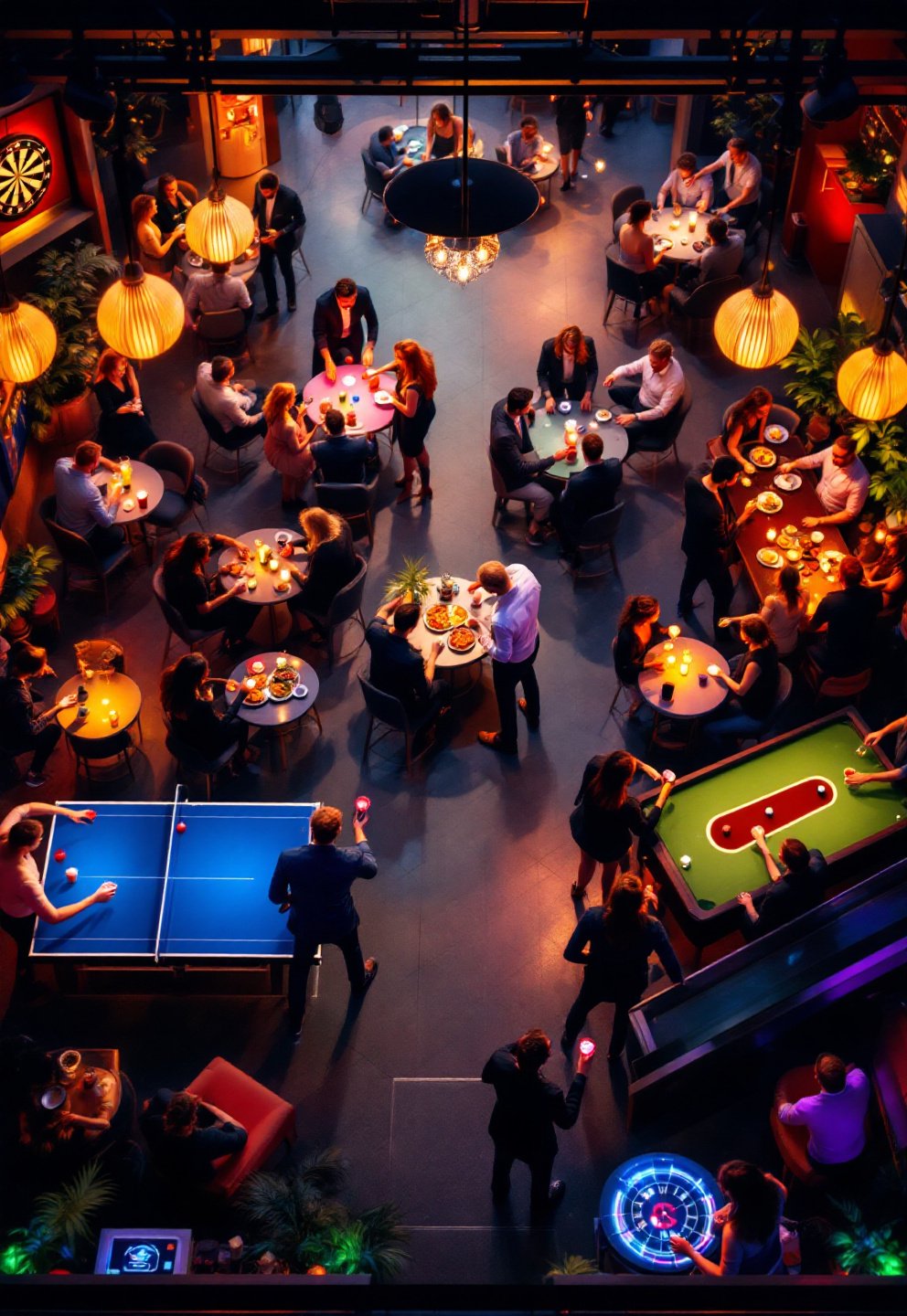
A competitive socialising venue is a space that hosts social, skill-based games (like darts, crazy golf, axe throwing, ping pong or shuffleboard), integrated with a high-energy bar and casual dining. Think “games night with food and drinks in a purpose-built, Instagram-friendly space” — not just a pub with a pool table. Unlike a traditional pub or a dry activity centre, these venues deliberately combine play, food and drink to create all-in-one experiences that are easy to book, scalable, and ideal for groups. Nearly 1 in 3 UK adults visited a competitive socialising venue in the previous 12 months (KAM insight — 2025), reflecting how mainstream the category has become.
Market snapshot — growth, scale and why suppliers are investing now
The UK now boasts around 800 competitive socialising venues — up 58% since 2018 — and this figure is climbing toward a projected 1,100 sites by 2030, with the total market expected to reach approximately £1.2bn by 2027. The sector recently saw 24.3% year-on-year growth to March 2025, as operators repurpose vacant retail for immersive, multi-activity spaces. For event organisers, this means wider choice, faster turnover of concepts, and rising minimum spends, especially in major cities where “competitive socialising near me” is a breakout search trend. Expect more venues, but also more competition for prime dates and the best packages.
Why competitive socialising works for corporate team building and private parties
Competitive socialising activities break down awkwardness, foster collaboration, and encourage playful rivalry — all while guests bond over food and drinks. For corporate team building, these venues turn team members into participants instead of spectators, offering measurable outcomes in ice-breaking and cross-team mixing. Private groups (birthdays, hen/stag parties) get a ready-made “main event,” rather than just an add-on. The stats are clear: visitors average 1.9 visits per month and 31% visit once a fortnight or more, indicating that these formats drive both fun and repeat engagement for teams and friendship groups.
Top booking pain points organisers face (and immediate fixes)
Competitive socialising venues can deliver, but only when you cut through common booking barriers. The big five:
- Cost/value tradeoff: Cost is the #1 barrier to competitive socialising event hire. Fix: Demand a full breakdown of what’s included (minutes on game, food portions, drinks, staffing ratio), and ask for tiered packages to match your budget.
- Booking friction: “Having to always book in advance” frustrates many — and piecemeal F&B/activity bookings eat time. Fix: Choose venues with an integrated booking process and require a consolidated quote covering games, food, and drink.
- Queues/wait times: Long waits kill the experience — especially at peak times. Fix: Insist on a written confirmation of slot timings, maximum group/lane sizes, and presence of marshal staff.
- Unclear capacity or layout: Many venues don’t clarify what a space truly fits with food + play. Fix: Request a floorplan or capacity chart for your chosen time slot.
- Accessibility: Physical access, carer arrangements, and neurodiversity support are rarely spelled out. Fix: Ask for a published accessibility guide specific to your event areas.
For detail on pricing transparency, see [this breakdown of event venue pricing](https://www.eventory.agency/event-venue-transparent-pricing-guide/).
The features most venues don’t make obvious — questions to ask before you book
Even seasoned planners miss out when venues skip key info. Before locking in your event, probe for:
- Structured event agendas: Is there a sample schedule (e.g. for axe throwing event hire or crazy golf private event) showing welcome, food timing, game rotations, and awards?
- Accessibility and neurodiversity: Are game areas step-free? What about quiet spaces and seating for guests with access needs?
- Safety and alcohol policies: For “high risk” activities, what’s the supervision ratio, and what rules apply to alcohol during play?
- Transparent pricing for mid-size groups: Can you see clear, per-person package costs for core group sizes (15, 40, 60), not just small tables or full buyouts?
- Outcome/ROI stories: Does the venue provide business-outcome case studies showing previous teams’ results (not just social media pics)?
Research shows very few venues publish detailed event-format guidance or upfront accessibility details. Confirm these in writing.
Typical pricing and booking requirements — realistic ranges and how to read them
You’ll encounter two main models: per-activity pricing and minimum-spend private hire. Here’s what to expect:
- Social darts: £11 (60min), £15 (90min) per player. Off-peak may be slightly less. Popular for ping pong club event booking too.
- Axe throwing: £35–£60 per person (lane packages from £290 for 10). For axe throwing event hire, always check if supervision and introductory coaching are included.
- Mini/crazy golf: £10–£16 per person per round. Packages (e.g. with food/drink) may be £22–£60 per head. Ask about peak and off-peak windows, especially for crazy golf private event nights.
- Private hire minimum spends: For evening team events (30–60 guests), expect a minimum spend of £1,500–£2,000; full-venue hire (100–200+) can run up to £22,500 in city centres.

Check deposit and cancellation policies — many venues require a non-refundable deposit and offer limited flexibility on prime dates, especially for shuffle board hire event or multi-activity bookings.
Sample event formats and agendas (templates for 15, 40 and 100 people)
Agendas can make or break the experience, especially for competitive socialising activities event hire. Here are three proven formats to avoid queueing headaches:
-
Small group (15 people, 90 mins):
- 18:00 – Arrival, welcome drink
- 18:15 – Game briefing; group splits into 3 teams (rotate between games: darts, shuffleboard, ping pong)
- 19:15 – Buffet-style food served as games wrap up
- 19:30 – Social/drinks
-
Medium event (40 people, 3-hour corporate/team-build):
- 16:00 – Welcome, intro from host
- 16:15 – Teams assigned; games block with referee/marshal (darts, golf, axe if hired); 3 x 45-min rotations
- 18:15 – Buffet meal or bowl food; networking zone open
- 18:45 – Leaderboard reveal; awards/presentations
-
Large private hire (100 people+, 4+ hours):
- 18:30 – Drinks reception, light snacks in networking zone
- 19:00 – Main event: guests rotate in groups across multiple activities (30-min slots, 12–15 per activity)
- 21:00 – Food stations open; free play continues
- 22:00 – Winners announced, DJ/music, open bar
Many organisers book weeks/months in advance for Thursday–Saturday evenings; plan game rotations tightly to avoid bottlenecks, as game length overruns and queueing are the root of most dissatisfaction.
How to integrate food & drink so the experience feels seamless (operator best practices)
Food and drink can turn a chaotic night into a smooth-flowing evening. Successful venues use:
- QR ordering at game stations/lane tables: Guests order food/drink without leaving their activity, reducing wait times. This is now standard at many darts bar event corporate venues and crazy golf private event locations.
- Staggered and purposeful service: Food is served between rounds or during rotation breaks to avoid spills and interruptions. Organisers should specify these timings.
- Snackable menus: Handheld options (e.g., sliders, wraps, tacos) keep guests mobile and the focus on play.
- Bundled packages: Choose packages that include food and drinks by default rather than add-ons to streamline logistics and budgets — helps keep the group together.

58% of competitive socialising visits “often” or “always” include eating in-venue; QR ordering and integrated tech reduces lost game time and guest complaints.
Safety, age and accessibility: must‑check policies (especially for axe throwing)
Don’t assume all venues have robust or visible safety or accessibility processes. For activities like axe throwing event hire:
- Minimum ages: Most axe venues are strictly 18+ (always confirm), social darts may allow under-18s outside bar hours or with supervision.
- Supervision and alcohol: Ask about ratios (staff-to-guests), competency checks, and whether any alcohol is allowed before/during play.
- Step-free and neurodiversity access: Get clear, written details: entrances, lift access, quiet spaces, policies for carers — don’t accept “we’ll manage on the day.”
- Carer tickets: Note examples like Puttshack, where carer entry requires 48-hour email notice. Push for instant confirmation where possible.
Axe-throwing pages commonly enforce 18+ policies, but published documentation on safety and supervision is inconsistent — always check what’s signed off and get your guests to pre-sign waivers where needed.
Misconceptions that hurt discovery — how to search and what terms to use
You’ll find most venues are not indexed as “competitive socialising venue” in Google — and 62% of customers hear about venues via word of mouth. Instead, people search for activity names:
- Certain to work: “crazy golf near me”, “darts bar hire”, “axe throwing event”, “ping pong club event booking”, or “shuffle board hire event”.
- If researching multiple options: “games bar London”, “team building activities event hire”, or “activity bar with food”.
- For all-in-one events: combine with “private hire” or your group size (“mini golf private event for 40”).
Prioritise these search strategies for faster discovery, then compare if venues package multiple games (often a hidden strength). Don’t forget to review booking guides like our [corporate event venue selection](https://www.eventory.agency/corporate-event-venue-selection/) for hybrid formats.
Common post‑event complaints and how venues (and organisers) should prevent them
Negative reviews and feedback repeatedly cite:
- High prices/poor value: Address by insisting on full price transparency — what’s included, how many drinks, minutes of game, and food per person. Pressure venues for tiered options.
- Long queues, poor queue management: Prevent with clearly timed slots, staffed rotations, and marshalling. Make this a contractual point.
- Poor service/communication: Set a required service-level agreement (SLA) for pre-event support — e.g., email response times within 48 hours, phone contact on the day.
- Facilities (toilets/cleanliness): Request venues to commit to maintenance frequency ahead of your event; follow up during the site visit.
KAM research indicates game length and queueing are the most frequent activity complaints. Many issues can be mitigated when organisers demand specific, written confirmation on the above for their group.
Post‑event follow‑up and measuring success (ROI for corporate organisers)
For corporate teams, show value beyond “we all had fun” by reporting clear outcomes:
- Quick survey: “Did this break the ice across teams? (Yes/No)”, “Would you recommend this activity for new starters?”
- Engagement score (1–10): Ask line managers for their team’s engagement and communication improvement.
- Net Promoter Score (NPS): “How likely are you to suggest a competitive socialising corporate team building activity as our next event?”
- Objectives checklist: Review with HR whether agreed team-building goals were met (cross-departmental mixing, new joiner integration, etc.).
Few venues offer templated post-event measurement — take ownership or request that the venue provides you feedback tools at the point of booking.
Quick booking checklist + 10 sample questions to include in your enquiry email
Before you send an enquiry, run through this list:
- Group size and capacity per session
- What’s included per person per package
- Exact timings (game start/end, food & drink service slots)
- Queue management and staff ratios
- Floorplan/area layouts for your group size
- Step-free and accessibility arrangements
- Dietary and drinks menu options
- Deposit/payment schedules and cancellation terms
- Backup plan if an activity unavailable (e.g. technical failure)
- Integrated booking for all elements (not split invoices or contacts)
Sample enquiry email questions:
- Is our group size (XX) manageable with structured rotations and no excessive waiting?
- Can you provide a complete agenda including timing per activity and F&B service?
- What is the exact package price per person (inc. VAT and service)?
- How many staff/marshals will be dedicated to our group?
- Is the activity area step-free and suitable for guests with accessibility needs?
- What’s your cancellation/change policy for group bookings?
- Can we consolidate activities, food and drinks into a single quote/contract?
- What time can we access/setup the area and do you allow early access?
- Will there be a dedicated host or point of contact on the night?
- Are there any hidden fees (room hire, late night surcharge, extra cleaning)?
Many venues still require separate enquiries for activities, F&B, and schedules — only proceed with those offering consolidated quotes and a single point of contact. For more checklists, see [turnkey event venue package guidance](https://www.eventory.agency/turnkey-event-venue-package/).
Next steps & recommended minimum asks when negotiating a quote
Once you shortlist a venue, insist on these deliverables to protect your budget and guest experience:
- Written sample agenda, with timings and assigned staff/marshals per group/activity.
- Guaranteed marshal or host ratio during play; confirm this is contractually binding, not ‘best effort’.
- Centralised confirmation for all bookings (activities, food, drinks) and integrated order capability (online or via email/portal).
- Refund/credit policy in plain English: how do they handle cancellations or technical failures?
- Full list of inclusions (e.g., use of a private area, trophy/awards ceremony, exclusive access to certain games).
- Explicit plan for high demand/overrunning slots (do they build in a buffer or alternative activity?)
Sector audits reveal that many venues under-invest in booking systems, leading to misallocated slots. A written commitment on these points gives you leverage if issues arise, and minimises after-the-fact disputes.
You may also want to consider reviewing our private event venue guide for additional due diligence steps, especially for smaller groups.
Are children allowed at competitive socialising venues?
Usually, activities like axe throwing and evening sessions at most venues are strictly 18+ due to licensing and safety. Some venues allow under-18s during daytime slots for less risky games; always confirm policies in advance.
Can you combine multiple activities (e.g., darts AND crazy golf) in one booking?
Many venues offer multi-activity bundles, but not all allow seamless cross-booking. Always check if you can package games into a single event schedule and single invoice to keep logistics simple.
What if my group includes guests with accessibility needs?
Ask for a full accessibility and inclusion guide before booking. Ensure there are step-free routes, reserved seating, and arrangements for carers or guests sensitive to noise/light.
How far in advance should I book a competitive socialising venue?
For Thursday-Saturday events, booking 4–12 weeks in advance is typical. For large private hire, lock in your date 3–6 months ahead, especially for peak dates.