Rooftop Venue Hire Without the Stress

Plenty of hosts fall in love with a skyline view, sign the contract, and only then discover the 9 pm outdoor sound curfew and the midday weather-call clause. With rooftop venue hire averaging $1,800–$5,500+ per hour in top markets, those fine-print details are expensive to learn the hard way. This guide breaks down all-in costs and the exact questions that stop last-second surprises—for weddings, corporate cocktails, and milestone celebrations alike.
Key Takeaways
- Luxury rooftop venue hire is rising fast, averaging $1,800–$5,500+ per hour in top markets and often forming 24–40% of total wedding budgets.
- Logistics, weather backup, noise policies, elevator access, and hidden minimums are the main sources of confusion and surprise charges—so push hard for full transparency up front.
- Always get written answers for backup plans, capacity, inclusions, elevator and load-in diagrams, and noise curfew to avoid expensive day-of emergencies.
- Why rooftop venue hire commands a premium — and why transparency matters
- Step by Step Guide: Securing the Right Rooftop Venue Hire
- What Rooftop Venues Leave Unsaid
- Turning Rooftop Wow Into Real Value
- Frequently Asked Questions
Why rooftop venue hire commands a premium — and why transparency matters
Rooftops are positioned as the urban event world’s most luxurious and exclusive venues. Their panoramic views and prime locations fetch the top price bands—think $1,800–$5,500+ per hour, and full NYC rooftop weddings can run from $25,000 (small), hitting $200,000+ (large). What’s less visible? Transparent answers and logistics: backup rain plans, elevator access, overtime, neighbor rules, and precisely what’s included.
Events on rooftops are soaring because couples, planners, and brands now seek immersive experiences—not just a space. But the same features that make a rooftop magical also make it high-risk for the planner: logistics—elevators, wind, sound curfew, tent engineering—are often glossed over in glossy online listings. The difference between a smooth rooftop event and a disaster? Knowing exactly what’s included, what’s not, and having every backup scenario in writing.
You can explore creative concepts with the Event Inspiration Ideas library, or keep your planning sharp and current with the Eventory blog. For step-by-step logistics, budget prep, and negotiation checklists, the Ultimate Event Planning Guide walks you through every critical detail.
Step by Step Guide: Securing the Right Rooftop Venue Hire
-
Define Your Event Type, Budget, and Guest Count Upfront
- For rooftop venue hire wedding, set guest count, ceremony/reception hours, and F&B expectations—use the guest list calculator to check realistic capacity for the space (remember, backup plans often fit fewer).
- For rooftop terrace hire engagement party or birthday: durations are shorter (3–5 hours), so push for lower minimums or hourly rates.
- Corporate? Confirm AV needs, brand activation requirements, and public/private rooftop rules.
-
Lock Down Your Budget Early
- Use the event budget calculator to map out expected venue costs ($1,800–$5,500/hr in major cities, often 24–40% of total wedding spend per industry data).
- For F&B or minimum spend models, get clear quotes on food, beverage, staffing, tax, and service fees—not just the space rental.
-
Screen for Logistics and Accessibility: Don’t Assume Anything
- Ask for load-in and elevator diagrams—vendors can struggle if there’s only a small passenger lift or limited delivery windows. Use the plan your event tool for day-of layouts and timelines.
- Confirm ADA access for guests with mobility challenges (elevator to rooftop, step-free bathroom travel).
- Get measurements and photos on all stairs, elevators, load-in doors, and guest flow bottlenecks—print a checklist for your site visit.
-
Interrogate the Weather Plan—Every Time
- Demand a copy of the written weather plan. Find out what is included (indoor backup? tenting? heaters?) and what triggers extra charges. Contracts usually require weather calls between 10:00 and 13:00 for tent setup or backup room activation.
- Ask if “rain is not force majeure”—meaning, you pay full price if you move indoors, unless negotiated otherwise.
-
Quote and Compare All Add-Ons and Hidden Charges
- Use the event catering calculator to gauge true food, beverage, and service fees. Itemize security, elevator/freight, tenting, cleaning, and overtime.
- Push for a single, inclusive quote with line-item details—and walk if they won’t provide it.
-
Finalize Booking Windows and Negotiate for Peak Dates
- Book at least 12–18 months ahead for rooftop weddings on peak Saturdays in tier-1 cities; 6–9 months for major corporate or engagement bookings.
- Weekdays sometimes offer 15–35% discounts, so consider weekday buyout if you’re flexible.
-
Secure Written Confirmation on Every Logistics Detail
- Don’t sign until you have: elevator access (with backup plans), guest capacity by scenario, final curfew and noise limits, and hard caps on extra fees—all in your contract.
- Read our product reviews for tested decor, heaters, and temporary flooring that work for rooftop and tented settings.

What Rooftop Venues Leave Unsaid
Most rooftop venue issues arise not from bad luck, but from what’s left unsaid. Hidden costs, omitted logistics, and vague “contingency” promises drive avoidable stress.
Don’t Get Burned—Key Pitfalls
- Vague Rain Plan: Venue promises a “flexible plan” but omits whether backup is truly included, what capacity you get indoors, and if you pay extra for tenting or room flips.
- Elevator and Load-in Surprises: Decor or AV vendors discover a single small elevator, limited freight access hours, or union labor requirements—triggering high labor fees or delayed setup.
- Curfew and Noise Limits: Many rooftops must end outdoor sound early—often 9–10 pm—while indoor parties elsewhere run to midnight or later.
- Hidden Service Charges and Overtime: Look for cleaning, security, and late fees buried in the contract fine print or added post-event.
- Max Live Load: Not all rooftops can handle heavy furniture, dance floors, or stages—always ask for engineering specs.
- Restrooms and ADA: Many are off-level or inadequate—factor elevator/ADA routes into your guest flow.
| Rooftop Venue Challenge | Standard Ballroom | Open-Air Rooftop Venue |
|---|---|---|
| Rain Backup Included | Yes (Built-in) | Often “add-on” or separate floor |
| Sound Curfew (City Center) | Midnight+ | Usually 9–10 pm outdoors |
| Elevator/Freight Clarity | Good | Varies—often limited, must confirm |
| Max Guest Load (Structural) | Rarely a concern | Must check pounds per sq. foot |
| Tenting Allowed | Not needed | Sometimes prohibited, often extra |
| AV & Power | Standard | Check available circuits, Wi-Fi |
| Hidden Service/Overtime Fees | Occasional | Appear frequently in contracts |
See the product reviews section for tested equipment (tent heaters, AV, flooring) that meet typical rooftop demands.
For even more decorator and design strategies that consider weather and logistics, use our in-depth event decorator hiring guide and these party decoration ideas that work indoors or out.
Turning Rooftop Wow Into Real Value
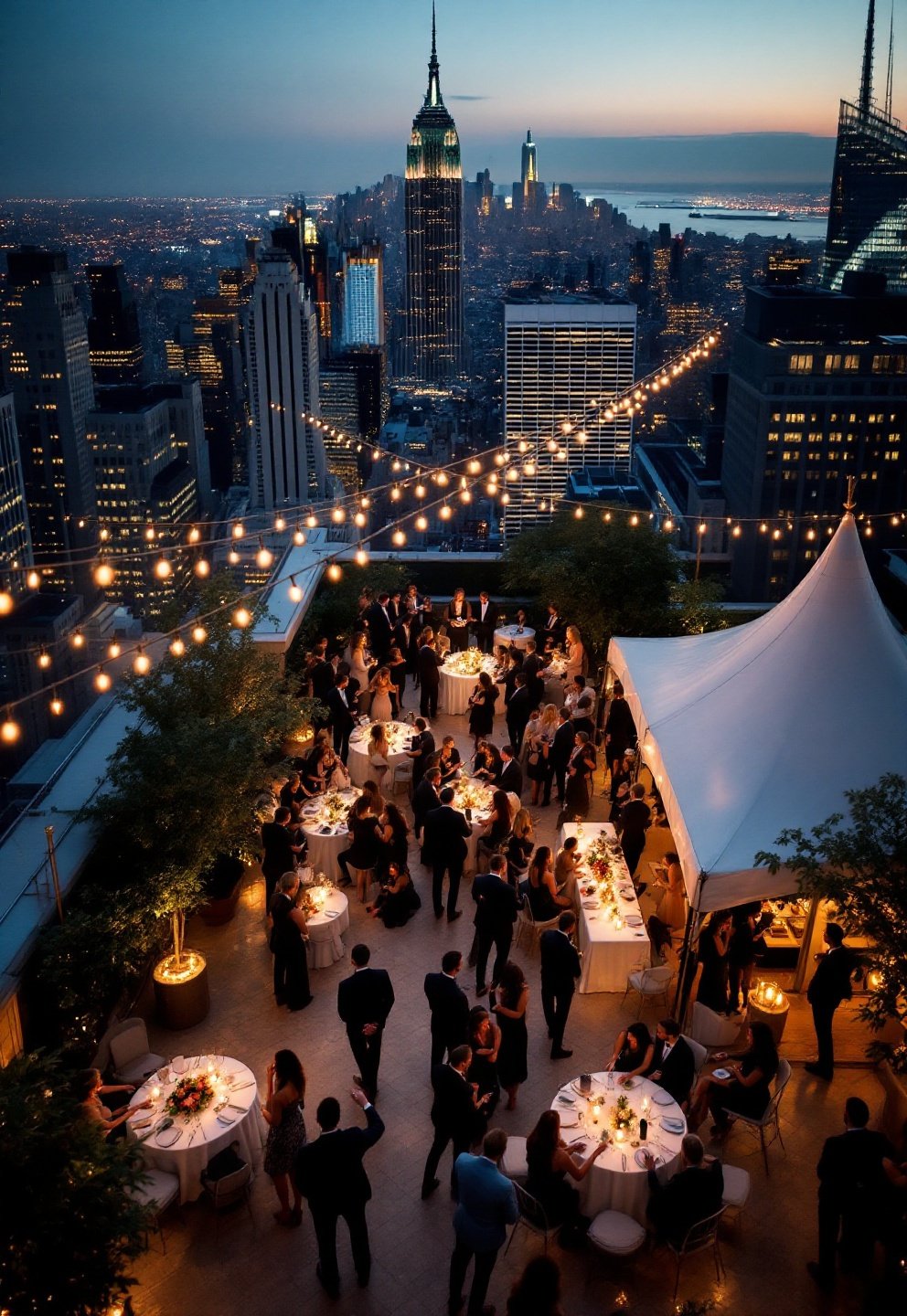
Rooftop venues are unbeatable for wow factor—but “luxury” pricing only delivers true value if you control the costs, logistics, and backup plan in writing.
From confirming elevator measurements to pinning down weather and tenting clauses, the best approach is direct: interrogate every omission, get every inclusion and extra fee mapped up front, and match your event type and timeline to the right rooftop (or reconsider if the risk is too high).
For a step-by-step, data-driven roadmap to rooftop venue hire that protects your experience and your wallet, download the Ultimate Event Planning Guide or use our free calculators—every premium event deserves clarity, not surprises.
Frequently Asked Questions
What is the typical price range for rooftop venue hire in major US cities?
In Tier-1 cities (like NYC, SF, Chicago), premium rooftop venues usually charge $1,800 to $5,500+ per hour. Complete rooftop weddings can range from $25,000 for small events to over $200,000 for large luxury experiences. Engagements and corporate events fall into $1,800–$3,000/hr or $15,000–$80,000+ depending on scale.
What details should always be confirmed in a rooftop rental contract?
Get written confirmation on: weather backup plan, rain/tent decision deadlines, elevator and load-in windows, guest capacity by scenario, exact end time and outdoor curfew, itemized costs (including cleaning, security, heating), AV specs, and clause capping overtime or surprise fees.
How soon should rooftop venues be booked for peak dates?
Book 12–18 months in advance for rooftop weddings on prime Saturdays—especially in NYC or SF. Corporate and social events usually require at least 6–9 months, especially if targeting sunset views or popular months (June, September, October).
What are the main logistical risks with rooftop venue hire?
Expect challenges with freight elevator access, limited delivery windows, strict noise curfews, structural load limits for staging or tenting, wind/weather rules, and ADA restrooms. Each must be verified and planned for in writing.
Are indoor backups or tenting included in the rooftop hire price?
Not always—indoor space and tenting are often extra-cost add-ons. Always get clear, written answers on what is included and get fixed option pricing if additional cover or backup is required.