Choosing a Wedding Reception Venue Without Blowing the Budget
Wedding reception venue selection can make or break the comfort, flow, and overall vibe of your big day. This guide focuses on much more than pretty pictures — it’s a clear, comparison-first look at what impacts your real guest experience, actual cost (including hidden fees), and how to book a venue that works for your wedding logistics and your budget.
Key Takeaways
- Venue rental plus catering typically consumes 30–50% of the entire wedding budget, with rental costs for a mid-size U.S. wedding now in the $8,000–$13,000 range.
- Hidden costs like service fees, taxes, rentals, and vendor policies can add 20% or more to quoted prices—always ask for all-inclusive, itemized proposals.
- Prioritize guest flow, comfortable capacity, and amenities (not just aesthetics) to avoid crowding, long lines, and unhappy guests on the big day.
- How much does a wedding reception venue actually cost in 2026?
- Region and venue-type price bands — what to expect where you live
- Hidden fees and line items couples frequently miss (and how to spot them)
- What the best wedding reception halls include — features that improve comfort & flow
- Comparing venue packages: space-only vs in-house catering vs all-inclusive
- Setup, teardown, and timing — why access windows matter
- Vendor flexibility — pros and cons of preferred vs open-vendor policies
- The most common complaints couples have — real logistical pitfalls to avoid
- Amenities couples want but venues often don’t advertise — high-value items to ask for
- How reception-layout and design trends have shifted (last 5 years)
- Practical, low-cost ways to maximize guest comfort and capacity
- Practical checklist & contract red flags — what to ask and what to require in writing
- Quick comparison table and final decision framework
How much does a wedding reception venue actually cost in 2026?
Wedding reception venue cost is usually the biggest single item in your wedding budget. The most recent national surveys show that average U.S. wedding reception venues now rent for $8,000–$13,000 — and that doesn’t count food, bar, rentals, taxes, and service. More comprehensive studies (like those from The Knot) report venue and catering combined often soak up 30–50% of the total wedding budget. Differences in these averages come from what’s included and your location. Always check if quoted numbers are for “space-only” (just a room) or include food, beverage, rentals, tax, or coordination.
Region and venue-type price bands — what to expect where you live
Before any site tour, benchmark venue pricing for your city and the type of venue you want. Here’s how prices break out:
- Compare local price bands: In high-cost metros like the Bay Area, NYC, or LA, Saturday venue rentals regularly exceed $20,000, with the Bay Area averaging close to $25,000 for popular spaces (source).
- Check by venue type: Typical mid-cost venues (ballrooms, vineyards) run $7,500–$20,000. Rural venues and backyard options can be as low as $2,000–$6,000, and barn/farm venues are often $6,000–$12,000.
- Watch what’s included: “All-inclusive” spots bundle food, rentals, bar, and coordination, with all-in packages ranging $10,000–$25,000+. Venue-only spaces might exclude everything except square footage.
You can use a quick local cost reference like below (from this venue guide):
| Venue Type | Typical Rental Range |
|---|---|
| Barn / Farm | $6,000–$12,000 |
| Hotel Ballroom | $7,500–$20,000+ |
| Vineyard | $5,000–$15,000 |
| Backyard / Private Site | $2,000–$6,000 |
| All-Inclusive | $10,000–$25,000+ |

For more on stretching your décor budget, read these actionable party decoration ideas.
Hidden fees and line items couples frequently miss (and how to spot them)
Most couples are caught off guard by venue fees that weren’t in the original quote. Here’s what to scrutinize in every wedding reception venue contract:
- Mandatory service charges and gratuity: These are typically 18–25% of all food and beverage. Not always shown upfront (Zola).
- Sales tax and administrative fees: Can tack on 10–20%.
- Setup/breakdown labor: Extra hours or complex installs can quickly add hundreds or more.
- Outside vendor fees: If you use a caterer, DJ, or décor team not on the venue’s list, expect per-vendor surcharges.
- Equipment and rentals: Some venues provide only the room—you’ll pay third-party vendors for chairs, linens, bars, even restrooms.
- Parking and shuttles: Some city locations charge for guest parking, while rural venues may require paid shuttle buses.
- Corkage and bar minimums: Want to provide your own wine? Corkage is often $10–$30/bottle. Sometimes only venue bar packages are allowed.
- Weather contingency rentals: Tents, heaters, or fans are rarely included in outdoor venue pricing.
Negotiation tip: Ask for an all-inclusive, itemized proposal before signing anything. Insist on clear language covering all expected fees in your contract.
Related: Learn how flower wall rental is priced and contracted for event settings.
What the best wedding reception halls include — features that improve comfort & flow
Don’t rely on fire code occupancy or photos alone. A comfortable wedding reception hall serves your entire guest list with extra breathing room, clear zones for dancing and mingling, and logical guest flow. Look for:
- True capacity (not just max occupancy): Ask, “What’s the comfortable seated guest count with a dance floor, bar, and buffet?”
- Multiple zones: Spaces for dining, cocktail hour, dancing, a lounge, and possibly outdoors—no bottlenecks between key areas.
- On-site kitchen/prep space: Ensures hot, fresh food (avoid cold catering horror stories).
- Quality restrooms and ample parking: Essential for 75–200 guests, especially at rural and barn venues.
- Climate control and weather backups: Heaters or A/C, plus clear contingency for rain or heat.
- Staffing and management: Best venues include setup, basic cleanup, and a dedicated day-of manager—for reference, top venues offer 6–12 hours of access with at least two hours for setup.
- Accessibility: Wheelchair-accessible entrances, restrooms, and parking lots.
- Bridal/groom suites: Not just for convenience—a real private prep room reduces wedding day stress.
Planning décor and entertainment? See our wedding and event entertainment trends for unique, guest-friendly ideas.
Comparing venue packages: space-only vs in-house catering vs all-inclusive
When evaluating wedding reception venue packages, don’t just compare photos. Line up exactly what’s included. Here’s a clear breakdown:
| Package Type | Inclusions | Typical Cost | Catering & Bar |
|---|---|---|---|
| Space-Only | Room, basic tables/chairs (sometimes), minimal setup time | $4,000–$12,000+ | None; you provide vendors/rentals |
| In-House Catering | Room, tables/chairs, in-house staff, basic rentals | $7,000–$20,000+ | $40/pp food, $25/pp bar is typical |
| All-Inclusive | Venue, food, bar, linens, china, decor basics, coordinator | $10,000–$25,000+ | Usually set menus/bar limits; per-person pricing |
All-inclusive is easiest, but often less flexible on food/bar. Space-only means more logistical work. Always ask for a detailed list of included items per package.
Try our centerpiece ideas guide if customizing your décor with rentals.
Setup, teardown, and timing — why access windows matter
Your contract’s “access hours” are a real make-or-break detail. Most wedding reception venue packages include 6–12 total hours onsite—a tight setup window is a leading cause of wedding-day stress. Standard guidelines:
- Ask for at least two hours of setup time before guest arrival (four is even better).
- One hour for teardown post-reception is a minimum; more if using many third-party vendors.
- Extra hours usually mean extra fees—always confirm the rate before signing.
- If you want late music/dancing, make sure venue music cutoffs align with your plan.
See if your prospective coordinator has run similar events in strict timeframes—experience counts.
Vendor flexibility — pros and cons of preferred vs open-vendor policies
Many venues require you to use their preferred vendors—especially catering, bar, DJ, and even décor. Here’s how it impacts the real cost and flexibility:
- Preferred-only policies usually mean higher costs, since in-house or approved partners set the prices (plus an “admin” fee at times). On the plus side, logistics are streamlined for the venue.
- Open-vendor venues let you hire your own, so you can source better value or unique services—but may charge $500–$1,000+ in “outside vendor fees.”
- Check bar/catering BYO rules: Some venues ban outside bar/catering completely or charge high corkage/service costs. Others are more welcoming with proper insurance paperwork.
Assess whether a venue’s convenience justifies any restrictions or costs. If you want to shop for best-value traiteur catering or a unique rental vendor, flexibility is key.
The most common complaints couples have — real logistical pitfalls to avoid
Even at well-reviewed spaces, couples run into these recurring pain points:
- Surprise service/bar fees: F&B totals spike with service charges, gratuity, and taxes not highlighted in the quote.
- Overcrowding: 200 guests at a space rated for “200 maximum” often means no dance floor, tight tables, and unhappy guests. Always ask for layout diagrams.
- Insufficient kitchen/prep: If hot food is served from a tent or side room, it’s often late or cold.
- Bottlenecks at the bar or buffet: Not enough stations = wait times and annoyed guests. Two lines are better than one.
- Not enough restrooms or parking: Especially an issue for converted barns or rural locations.
- Ambiguous “coordinator” roles: Some venue managers only handle the vendor schedule, not planning or guest flow.
- Early music cutoffs unexpectedly end dance parties—triple-check local rules and venue policy.
Avoid surprises: Ask each venue for a “red flag” list of what’s not included, and always walk the site. For reception ideas that work for all guest ages, explore creative balloon garland options.
Amenities couples want but venues often don’t advertise — high-value items to ask for
Plenty of venues underplay crucial comfort and value amenities. Don’t be shy—ask these questions and request them in your contract:
- Are tables, chairs, linens, china, and AV included? If not, what’s the exact rental cost?
- Is there guaranteed setup/teardown time? How many hours, and what’s the extra-hour rate?
- Is a weather contingency plan (with tent or backup space) written into the contract?
- Is there ample, on-site parking for all guests or will some pay to park/walk a distance?
- Will I have a dedicated day-of coordinator, and what exactly do they handle?
- Can I see an itemized proposal including estimated taxes, service, rentals, and vendor fees upfront?
Lack of these amenities is a major source of budget and comfort blowouts. Related: See how to hire an event decorator who can optimize any venue, not just work with what’s given.
How reception-layout and design trends have shifted (last 5 years)
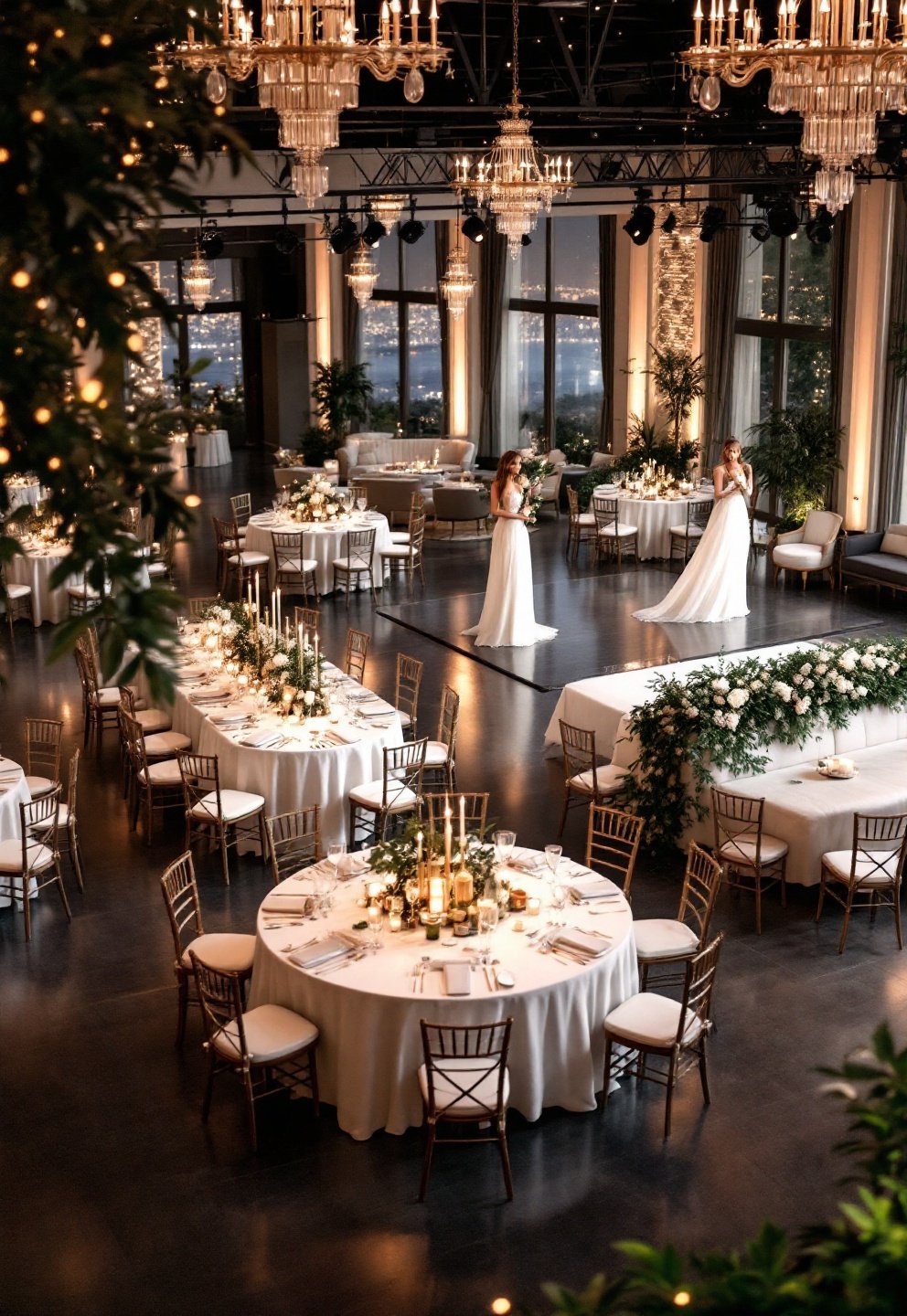
Layouts have changed. More couples now choose ceremony and reception at a single venue for simplicity and budget. There’s a strong trend to open-concept halls that allow for dinner, dancing, and separate “lounge” or bar areas—all in one space but clearly zoned. Other current shifts include:
- Flexible outdoor/indoor options: Barns, vineyards, and backyards are being upgraded with real bathrooms, better climate control, and true rain plans.
- “Blank canvas” spaces: Venues that allow your own decor, lighting, and entertainment concepts are trending up. Customization is in.
- Lighting and lounge areas: Extra attention to lighting and casual hangout spaces keeps guests engaged and comfortable all evening.
For more visual inspiration and event trends, visit our party decoration ideas post.
Practical, low-cost ways to maximize guest comfort and capacity
Improving guest experience doesn’t always mean spending more. Here’s how to get the most from your venue:
- Book off-peak dates: Venues are less expensive and sometimes offer more included extras on Friday, Sunday, or in lower-demand months.
- Combine ceremony and reception location: One-stop logistics and decor installations (take the savings and upgrade food or comfort features).
- Smart layout tweaks: Round up tables to reduce congestion, split bars/buffets to reduce lines, add lounge areas in dead space.
- Negotiate all vendor fees: Open-vendor venues provide more leverage; ask to waive outside vendor fees in exchange for off-peak booking or higher guest count.
- Reallocate savings from bundled rentals: Choose venues that include chairs, linens, and AV so you can upgrade climate control, add fans, or even basic lounge seating for comfort.
Want more tips? See Wedding venue near me: expert local venue guide for practical comfort upgrades and regional cost bands.
Practical checklist & contract red flags — what to ask and what to require in writing
- Ask these on every tour:
- What’s the actual “comfortable” seated capacity with a dance floor?
- Can I see an itemized breakdown—including service, tax, rentals, and overtime?
- How many setup and teardown hours are included?
- What’s your vendor policy—do I have to use in-house/bar/catering?
- What are the exact service charge and tax percentages on F&B? (18–25% is typical.)
- How late can music go? What’s the cutoff?
- Describe your weather backup plan (tents, covered space, power).
- Is dedicated parking or shuttle included in the quote?
- Day-of coordinator: What do they handle? Confirm in writing.
- Are tables, chairs, linens, basic china, and AV part of the base fee?
- Is a damage deposit or insurance required?
- Contract red flags to avoid:
- “Service charge additional, amount TBD.” Always require a specific %.
- “Overtime at venue’s discretion.” Insist on clear per-hour pricing.
- “Rentals available for additional fee—ask for rates.” Get hard numbers before signing.
- Ambiguous language about weather plans or staff roles.
For advanced tips on comparing rentals vs. included venue packages, explore our private catering pricing guide.
Quick comparison table and final decision framework
Use this simple flow/scorecard on every venue tour to decide what’s really “best” for you:
- Budget: Score only venues (with all known fees) that keep the total cost under 30–50% of your full wedding budget.
- Capacity & Comfort: Mark down any venue whose “max listed” is not comfortable (dancing, bar, mingling) for your guest count.
- Vendor Flexibility: Prefer open-vendor policies for cost savings and menu/bar choice, unless you want least effort.
- Included Rentals/Coordinator: Extras like decor, setup, day-of management, and rentals add huge hidden value.
- Parking/Weather Plan: Must have a clear, written solution for parking and rain/heat contingencies.
Jot down 1–5 points in each category and pick the venue with the strongest overall match—not just the prettiest photos. For more local venue selection strategies, consult our in-depth wedding venue near me guide.
Conclusion
Choosing the right wedding reception venue is all about reconciling budget realities, comfort for your entire guest list, and avoiding logistical headaches—all while understanding and negotiating what’s really included in each offer. Armed with clear questions, itemized contract language, and a few pro-level tricks, you’ll book a space that delivers not just aesthetics, but a seamless, joyful event. Start with these strategies and your planning foundation will be solid. Set up venue tours now, compare real inclusions, and insist on clarity in writing!
Frequently Asked Questions
What is the average wedding reception venue cost for 2026?
The national average wedding reception venue cost is $8,000–$13,000 for mid-sized receptions. This does NOT include catering, bar, or rentals, which often add another 30–50% to your total budget.
What hidden costs should I look for in a venue contract?
Always check for service charges (18–25% of food/bar), sales tax, furniture/china rentals, setup time, outside vendor fees, corkage, parking, and weather contingency costs. These can add 10–20%+ more to your quote.
How can I maximize comfort for 150–200 guests at my reception?
Choose venues with real capacity for your group (not just max occupancy), with plenty of restrooms, parking, split bar/buffet lines, and climate control. Negotiate for included rentals and clear access windows to avoid crowding and delays.
Are all-inclusive wedding reception venue packages better value?
They can be—but you trade menu/bar flexibility for easier logistics. Value depends on what’s actually included, your vendor preferences, and how service fees/taxes are handled. Always compare total package vs. DIY price.
What questions should I always ask when touring wedding reception venues?
Ask for: itemized pricing, setup/teardown windows, included rentals (tables/chairs/AV), specific service charge %, vendor policies, bar/corkage rates, music cutoffs, and weather/parking plans—in writing.