Essential Elements of Successful Event Decoration: A Practical Guide

Good event decoration is not about how much you spend or how many props you bring in. It is about a handful of decisions made in the right order: the mood you want, the light guests will see it in, how people move through the room, and the few details they will actually notice. Get those right and a modest budget looks considered. Get them wrong and even expensive flowers can feel scattered. This guide walks through each element, what it does, and the practical questions to answer before you book anything.
Start with a mood, not a shopping list
Before choosing a single item, write down three words for how the event should feel: relaxed and warm, formal and polished, playful and bright. Every later choice can be tested against those words. A moodboard helps, but keep it small; eight to twelve images that share a feeling are more useful than fifty that do not. Share it with every supplier so the florist, lighting company and venue are working from the same picture.
Then set the budget split. As a rough starting point, many planners put the largest share into flowers or greenery and lighting, because those change the room most, and a smaller share into signage and small details.
Lighting: the element that changes everything
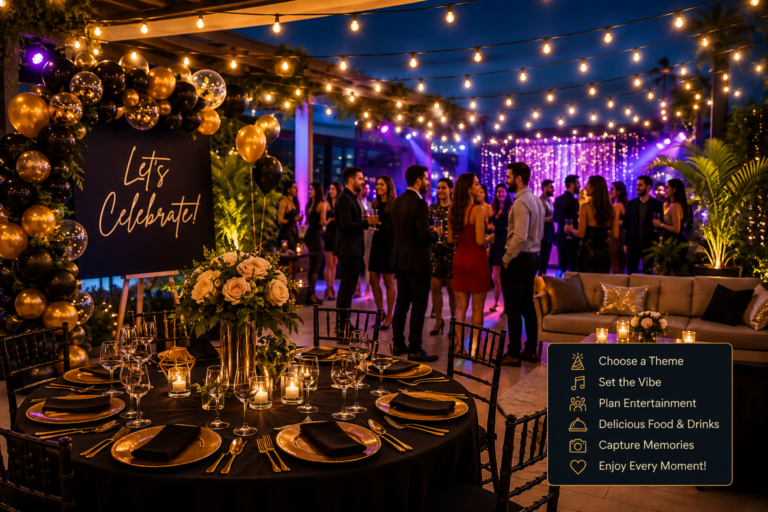
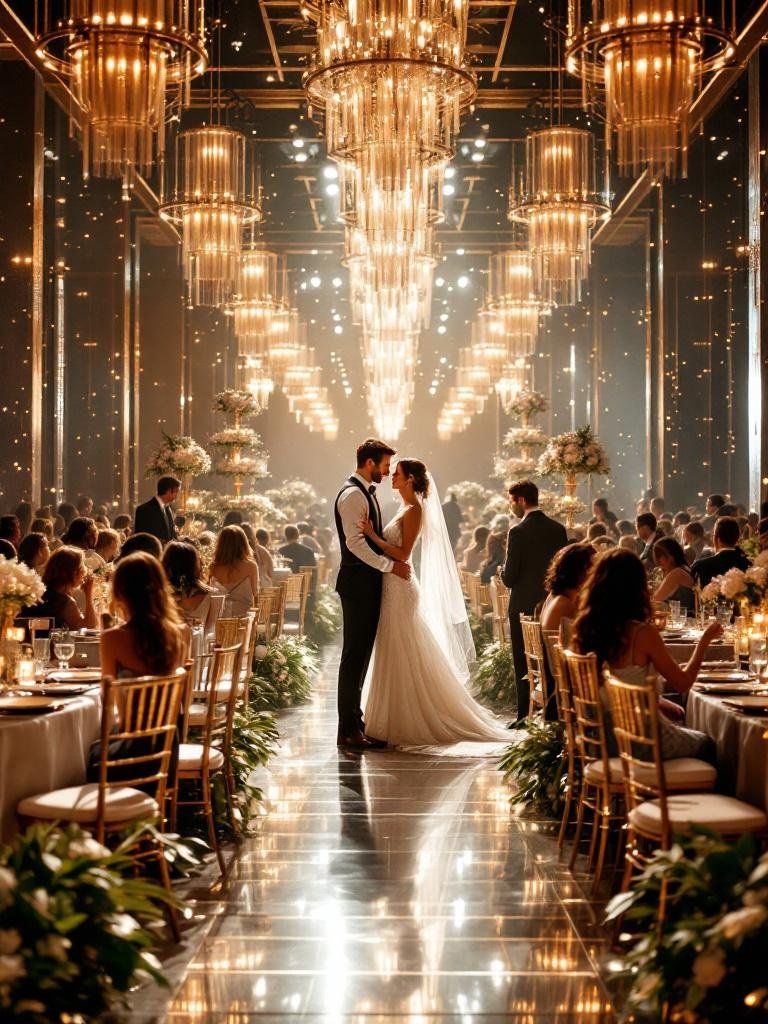
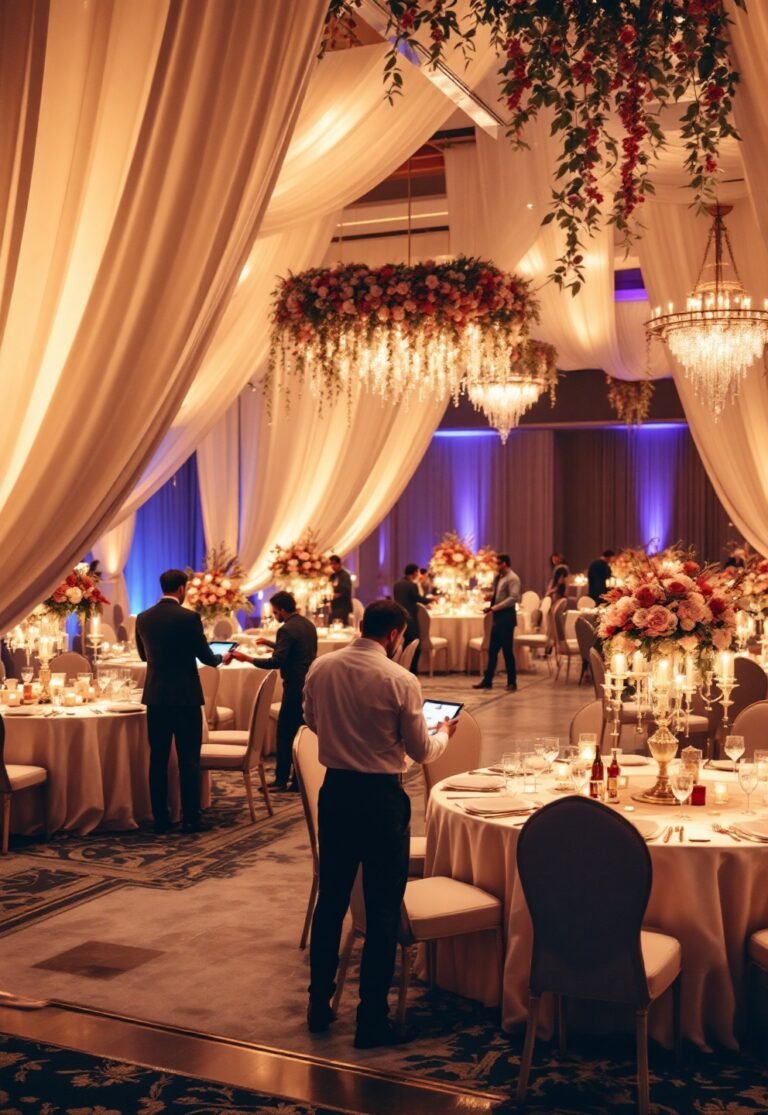
Lighting does more to a room than any other decoration, and it is the one most often left to the venue’s default settings. Soft, warm light (around 2,700K, the colour of a household bulb) makes a space feel intimate and flatters faces. Cooler or coloured light adds energy and suits parties, launches and dance floors.
- Turn the overhead lights down. Harsh ceiling lights flatten a room. Dimming them and adding lower sources, such as candles, lamps or uplighters, creates depth.
- Light the things that matter. A pin spot on each centrepiece or on the cake draws the eye where you want it.
- Check the room at the event’s time of day. A space that glows at 3 p.m. can feel dark and flat at 9 p.m.
- Ask about rules. Many venues restrict naked flames or require candles to be in glass.
Flowers and greenery
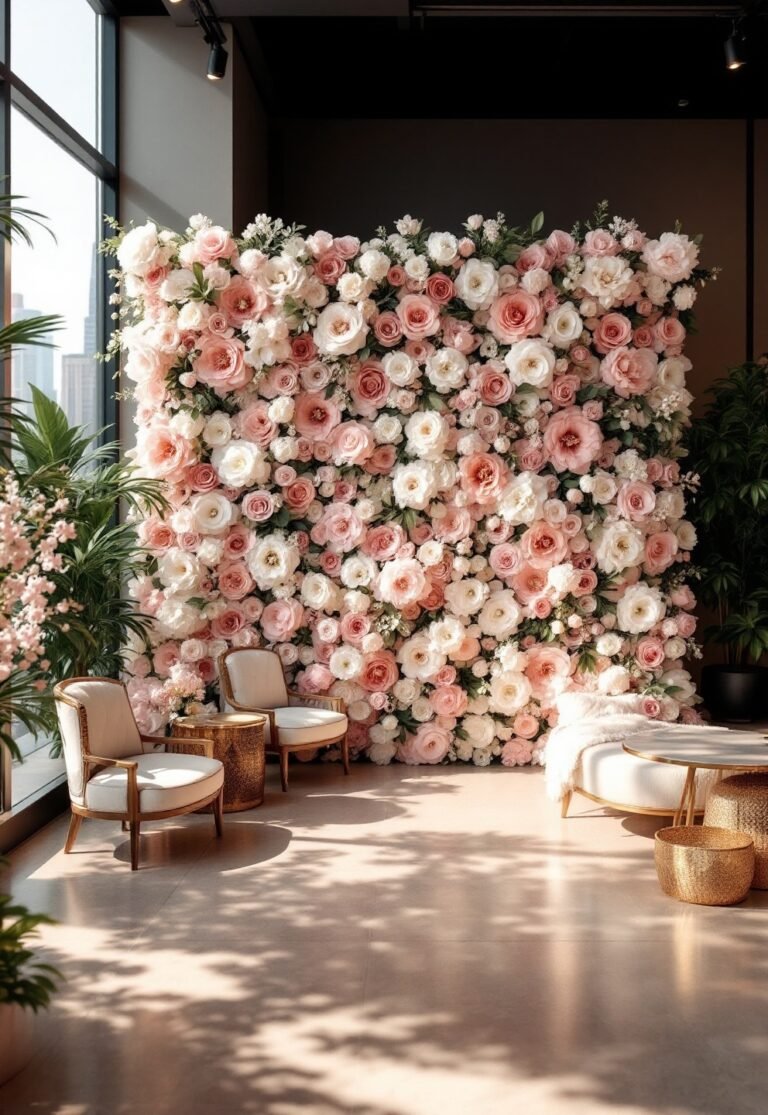
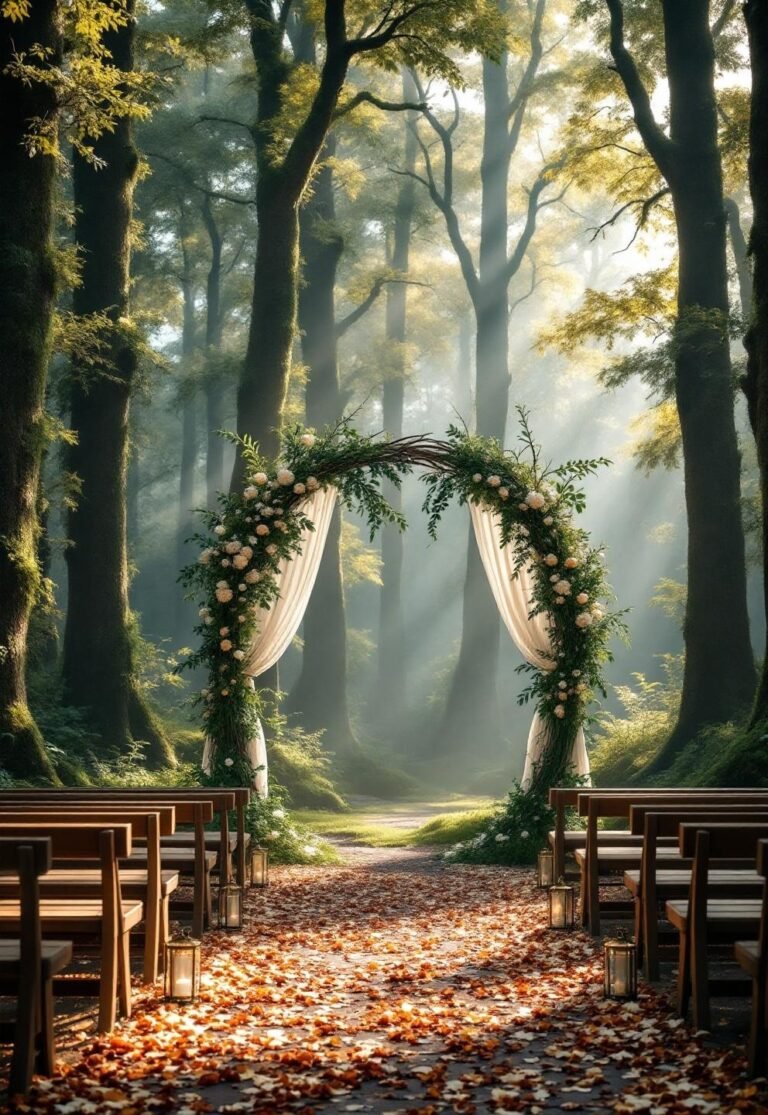
Fresh flowers bring colour, scent and life, but they are also the easiest place to overspend. Concentrate them where guests look: the entrance, the ceremony or stage backdrop and the tables. A single statement piece, such as an arch, a hanging installation or a flower wall, often has more impact than many small arrangements spread thinly. Our guides to flower wall rental and sculptural floral installations go into costs and setup.
- Choose flowers that are in season locally; they are cheaper and last longer.
- Use greenery to add volume at a lower cost than blooms.
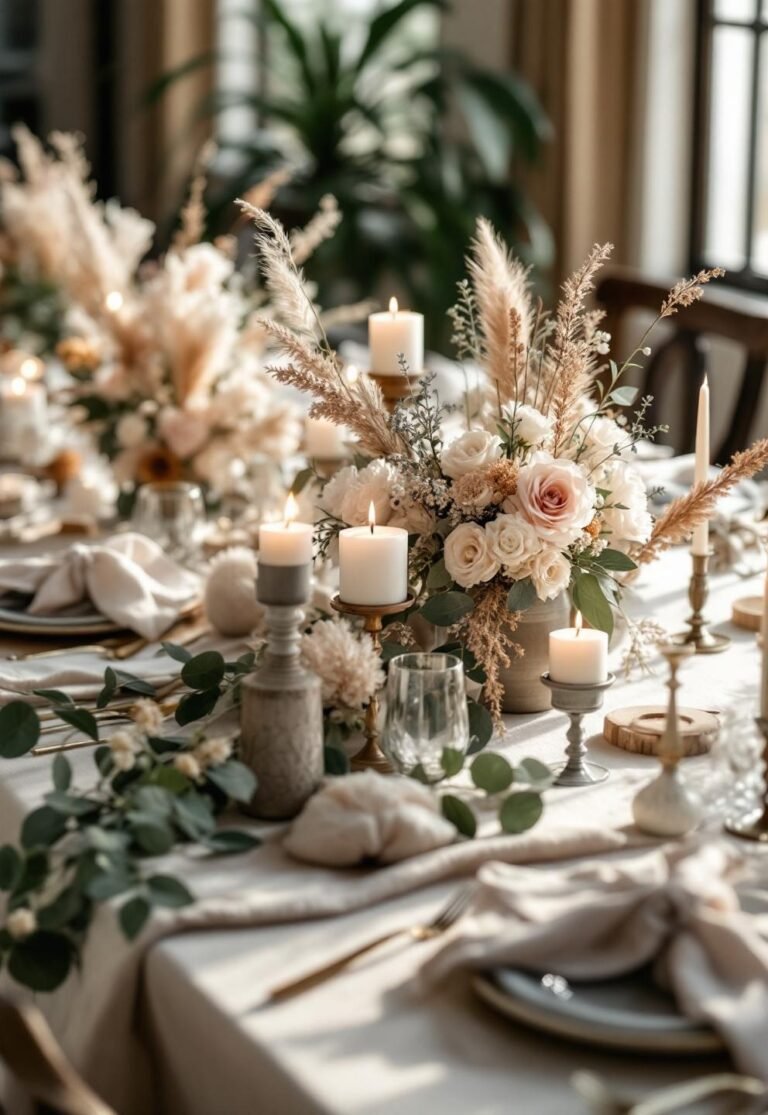
- Keep table arrangements below eye level (roughly 30 cm) or above it on tall stands so guests can talk across the table.
- Ask whether arrangements can be moved from the ceremony to the reception to use them twice.
Furniture and layout
Layout is decoration that people feel rather than see. The arrangement of tables, the stage, the bar and lounge areas decides whether guests can move easily, see the speeches and find somewhere to sit down.
- Draw a floor plan to scale. Allow about 1.5 metres between tables for chairs and service.
- Place the bar away from the entrance so arriving guests do not queue in the doorway.
- Create one or two lounge corners with softer seating for older guests and quieter conversation.
- Mix table shapes (round, long, serpentine) to add interest without extra decor.
Colour palette
A clear palette holds everything together. A simple approach is one main colour, one supporting colour and one accent, plus a neutral (white, cream, natural wood or greenery). Take the venue into account: a room with red carpet or strong wallpaper is already part of your palette whether you like it or not. Test colours under the event’s actual lighting, because warm bulbs shift blues and purples noticeably.
Fabric and backdrops
Draping is one of the most cost-effective ways to transform a plain room. It hides awkward walls, softens a ceiling and frames a stage or head table. Tablecloths and runners also do a lot of work for little money. If you want to go further, our guide to drapery decor covers fabrics, fire ratings and installation.
Personalised details
These are the details guests remember and photograph: a welcome sign with the couple’s or company’s name, table names that mean something (places you have travelled, product names, favourite songs), a monogram on the dance floor, a short printed menu. Pick two or three and do them well rather than personalising everything.
Practical checks before the day
- Confirm access times for setup and collection with the venue, and share them with every supplier.
- Check the venue’s rules on attaching things to walls, ceilings and beams.
- Make sure all fabrics and backdrops are flame-retardant where the venue requires it.
- Decide who is responsible for taking everything down and when.
- Photograph the finished setup before guests arrive, in case anything is moved or damaged.
Common mistakes
- Spreading the budget too thin. Many small touches disappear; one strong focal point is noticed.
- Ignoring the lighting. Beautiful decor under fluorescent lights looks cheap.
- Blocking sightlines. Tall centrepieces and backdrops in the wrong place hide the stage or the speakers.
- Forgetting the entrance. It is the first thing every guest sees and often the last place the budget reaches.
In short
Decide the mood first, spend most on light and flowers, plan the layout so people can move and talk, keep the palette tight and choose a few personal details. Those five decisions do more for an event than any single expensive item.
Frequently asked questions
How far ahead should decoration be booked?
For weddings and large events, florists and lighting companies in busy months are often booked six to nine months ahead. For smaller parties, four to eight weeks is usually enough, but confirm the venue’s setup times before you confirm any supplier.
Should I hire a decorator or do it myself?
Doing it yourself saves money on labour but costs time on the day, which is when you have the least of it. A common compromise is to hire professionals for the big pieces (lighting, a floral focal point, draping) and handle small items such as signage and table favours yourself, with a friend or family member responsible for setup.
What if the venue is already highly decorated?
Work with it rather than against it. Choose a palette that suits the existing colours, add lighting and table decor, and skip large backdrops that compete with the room’s own features. You will usually spend less and the result looks more coherent.