Rooftop Wedding Venues: Costs, Permits and Weather Backups
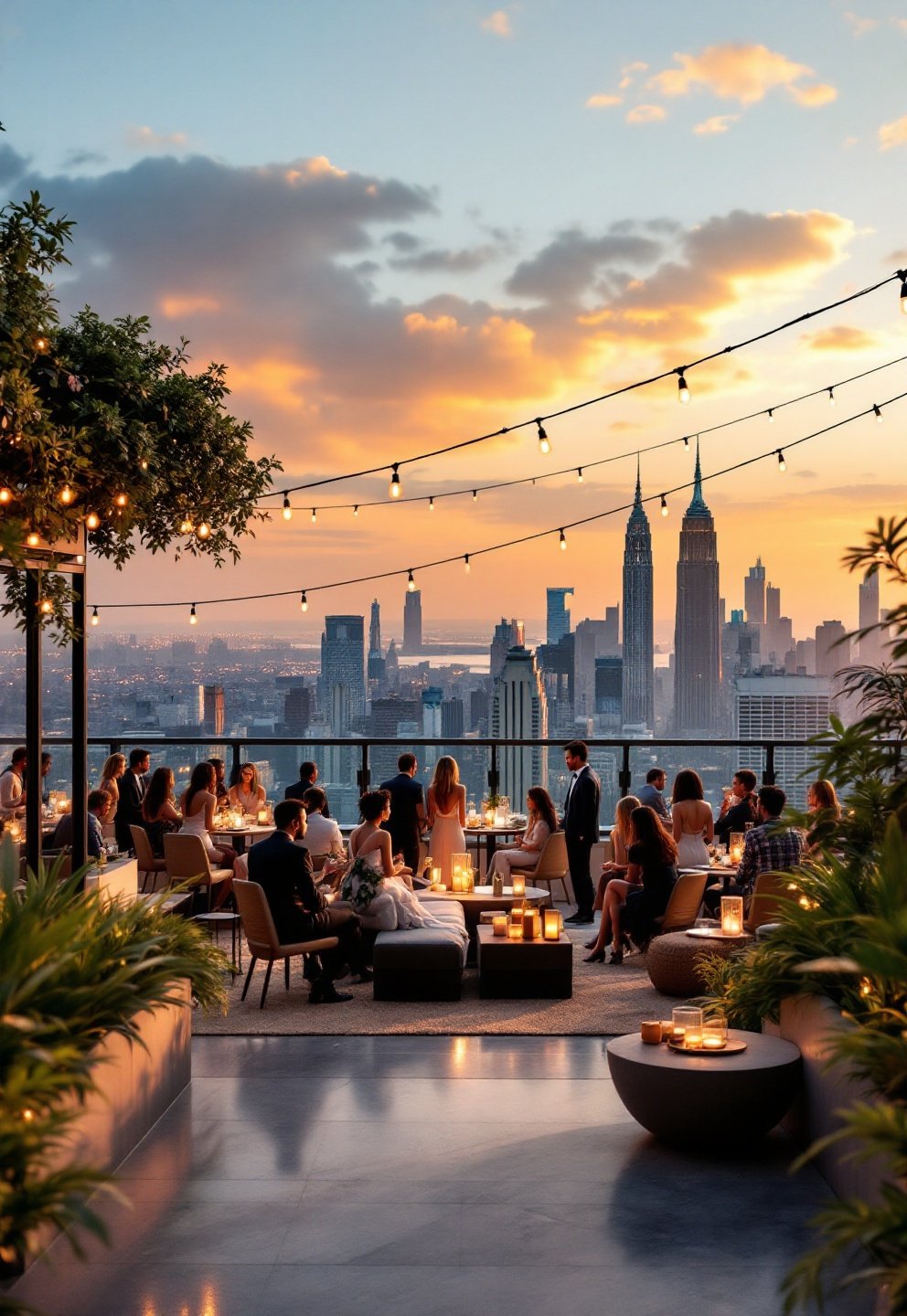
Demand for rooftop wedding venues keeps climbing, but few guides give blunt advice on budget, risks, and rules. Here’s what you actually need to know—costs, permits, weather, and make-or-break details other couples wish they’d planned for.
Key Takeaways
- Rooftop wedding venues command premium pricing and strict rules—always confirm weather and legal contingencies before signing a contract.
- Typical guest sizes (40–150) suit most urban rooftops. Weekday or off-peak bookings can trim venue costs by up to 40%.
- Overlooked pitfalls: noise curfews, hidden backup fees, vendor limits, and accessibility issues. Address these up front.
- Why rooftop wedding venues are trending now
- A 10-step framework for planning your rooftop wedding
- Permits, wind and hidden fees: what sinks rooftop weddings
- Is a rooftop wedding venue right for you?
- FAQ
Market snapshot — Why rooftop wedding venues are trending now
More couples are turning from banquet halls to urban rooftop weddings, chasing skyline views and personalized settings. The data backs it up—specialty venues (including rooftop wedding venues) are growing at 7.1% annually, significantly faster than standard halls. The rooftop-bar sector is also projected to reach USD 12.2 billion by 2033 at 7.9% yearly growth. Why? Millennials and Gen Z want unique, design-forward spaces with flexibility and photo-worthy backdrops. The best venues now blend industrial chic, micro-luxury, and flexible indoor/outdoor options. Bookings in major cities signal rooftops aren’t just a passing trend—they’re a steady, premium market play.
If you want visual inspiration or real-life stories, check out our Eventory blog and the event inspiration ideas page. For practical checklists and templates, the Ultimate Event Planning Guide offers a proven, step-by-step framework that covers all the logistics top-to-bottom.
A 10-step framework for planning your rooftop wedding
Urban rooftop weddings look amazing—but planning them is different from traditional venues. Here’s a real-world, 10-step framework:
-
Estimate your guest list and venue match.
Rooftop wedding venues work best for 40–150 guests. Use the guest list calculator to get a realistic number—aim for 10–15% fewer than the stated capacity for true comfort. -
Choose the right rooftop and compare city view venues.
Make a shortlist by style (industrial, garden, micro-luxury) and location. Use reviews and vendor lists for red flags. -
Secure your date early.
Peak Saturdays and sunset hours go first—if you consider a weekday, you might save 30–40% on rooftop reception venues. -
Build your budget with all likely extras.
Don’t rely on the base rental. Use this event budget calculator and check for hidden fees: backup setup, sound, staffing, elevator/freight, late-night surcharge. -
Book the right vendors—within venue rules.
Some rooftop venues restrict caterers, décor teams, or even DJs. Confirm with management before signing. For tips, visit our event decorator and flower wall rental guides. -
Sort permits and legalities early.
Every city is different, but check these: amplified music permit, occupancy/fire-code sign-off, rooftop access, tent/canopy rules, liquor licensing. The venue manager or the local jurisdiction are your best first stops. For outdoor/rooftop events, see outdoor wedding venue planning as a backup. -
Lock in a weather backup—in your contract.
Do not rely on a “verbal promise.” Get an explicit backup plan (indoor space, retractable roof, or tent) in writing, with clear cost and conditions. -
Plan guest flow, access, and safety details.
Factor in elevator schedules, load-in times, and accessibility (especially for older guests). Don’t forget wayfinding signage. -
Use tools for catering and timeline mapping.
Calculate food costs with our event catering calculator. Draft a timeline that accounts for rooftop setup, vendor arrivals, and noise cutoff rules. For food, check traiteur catering or traiteur fingerfood checklist for negotiation tips. -
Finalize your contract with a negotiation checklist.
Include: indoor backup, sound policy, approved vendors, overtime charges, insurance, and elevator/freight rules. Review with your vendors—see our product reviews before sourcing décor or AV suppliers.

For budgeting sanity, keep an eye on our plan your event tool, which walks you from initial vision to filled-in cost table—and syncs with calculator tools for every step.
Permits, wind and hidden fees: what sinks rooftop weddings
Most dreamy “skyline wedding venues” look amazing online—but reviews reveal consistent pain points. Here’s what really trips up couples, and a city-by-city cost/amenity table for faster shortlisting.
Hidden and extra costs: Know what’s not included
- Weather backup fees: Indoor backup space can cost an extra $1,000–$4,000, often due up front or non-refundable.
- Restricted vendor lists: Some rooftops require you to use in-house catering, décor, or AV, limiting choice and negotiating leverage.
- Elevator/freight access: Expect narrow arrival windows (sometimes pre-5pm), especially in shared buildings.
- Sound/musician limits: Many buildings enforce curfews (10pm is common) or ban live bands outdoors.
- Capacity overstatement: A “100 guest” space may actually feel jammed with more than 80—trust reviews and request a real, scaled layout.
- Accessibility: Elevators may be small, broken, or slow; ask about alternate access and mobility aids.
- Security/building fees: Larger city rooftops may add charges for guard presence or fire code monitoring.
See the latest trends and complaint recaps in the rooftop venue hire guide.
Market comparison: core cities, pricing, and what to ask
| City | Signature Rooftop Venues | Price Range | Capacity | View/Design Strength | What to Ask |
|---|---|---|---|---|---|
| New York City | The Press Lounge, 230 Fifth | $5,000–$10,000 | 40–150 | Skyline, iconic landmarks | Indoor backup? sound curfew policy? Elevator/freight access time? |
| Chicago | LondonHouse, The Signature Room | $3,000–$8,000 | 40–130 | Lake & skyline, hybrid layouts | Fire code limits? Vendor approval policy? Lake wind backup? |
| Los Angeles | Standard DTLA, Ace Hotel, Perch LA | $2,500–$6,000 | 40–120 | Sunset views, art deco/modern | Heat contingency? Tent policy? Parking access? |
| Miami/SF/London/Dubai* | Photo-infer, check locally | $2,500–$9,000* | 40–150* | Depends on skyline and season | Local permit rules, seasonal closure, late-night sound |
*Based on external benchmarks, always confirm exact policy and price
Overlooked safety/logistics failures: Don’t risk your day
- Rooftop structural load: Physical capacity limits are absolute. Never fudge your guest count “by 10” to save money—your contract, insurance, and the fire code are on the line.
- Noise ordinances: Ask for a copy of building or city sound curfew policy. A DJ cut-off at 9:30 rarely appears in the sales tour, but it will in your contract.
- Weather exposure: Even with a tent, strong winds or sudden rain can halt your celebration. Ask who decides and what they actually do if weather rolls in.
- Seasonality: Some venues close November–March or May–September in hotter climates. Confirm dates in writing.
- Vendor limitations: Many city rooftops only allow a few “preferred” companies (for catering, décor, AV) on site. Request the current approved-vendor list up front. For guidance, try the event decorator hiring guide.
- Accessibility/aesthetics: Don’t assume elevators or ramps unless you see them. If style is paramount, compare with luxury event venues for design and guest flow.
For guest comfort hacks, check curated product reviews on tenting, shade, and rooftop-appropriate décor (like wind-resistant centerpieces or alternative flooring). Also, our budget party decoration ideas include materials specifically suited for breezy, sun-exposed settings.
Permit realities: Don’t skip your venue’s “fine print”
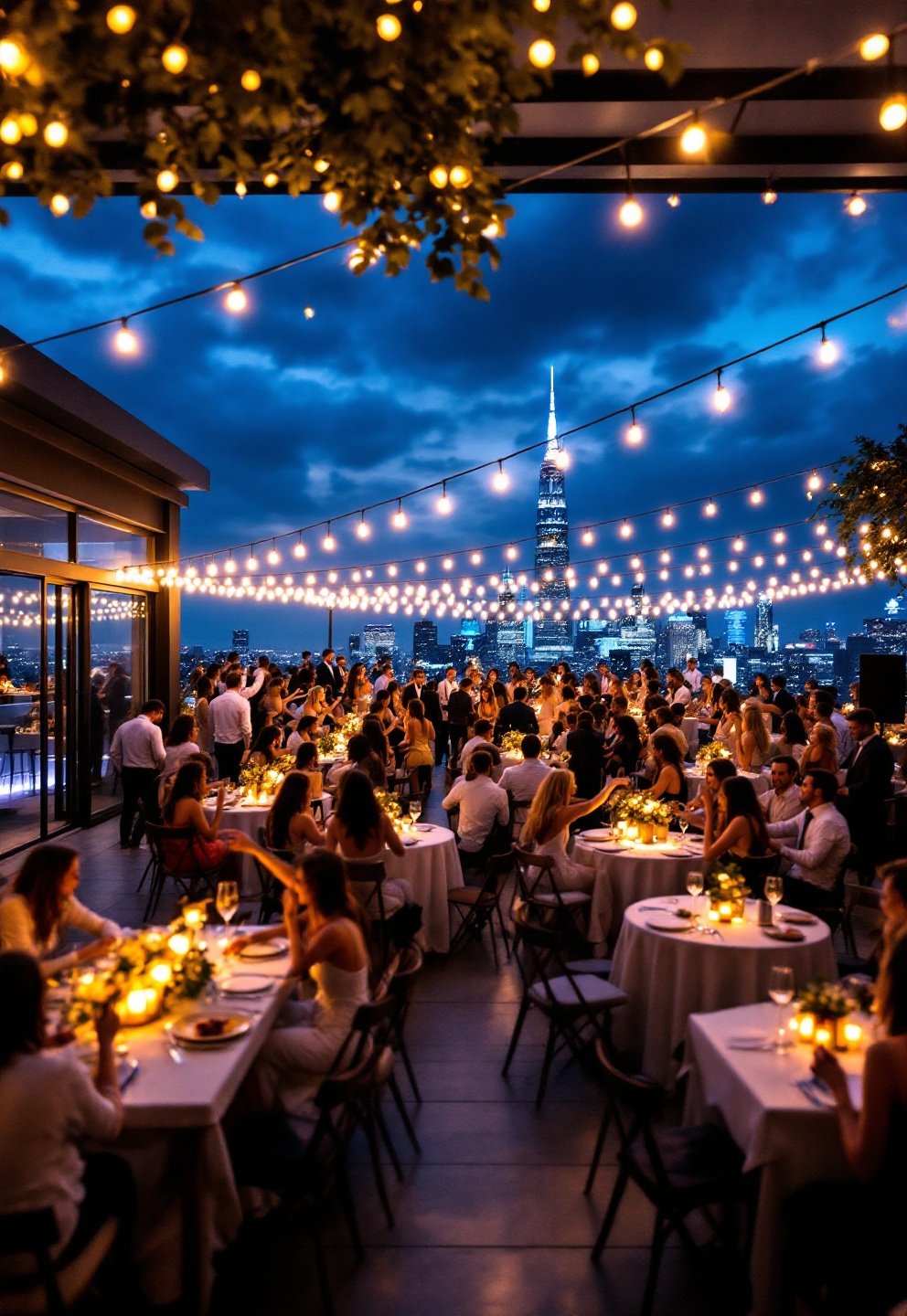
Read this research: Major complaint themes include lack of sound permit, peak-overcapacity, forced early shut-down, and inaccessible roofs. Every city is unique—never sign until you review permits and see the written rules for your city.
Learn more in the official rooftop-bar market trends and the wedding venue investment forecast.
Is a rooftop wedding venue right for you?
Choosing between beautiful rooftop wedding venues and more traditional options comes down to your priorities. Are skyline views and atmosphere worth the higher cost, stricter rules, and planning complexities? If yes—do your homework, lock in backup options, and clarify every detail before sending a deposit.
Ready to compare venues, costs, and backup arrangements? Start with our Ultimate Event Planning Guide for the complete city rooftop checklist and actionable templates. Or test your numbers risk-free using the latest event budget calculator for fast, side-by-side venue cost planning.
FAQ
What is the average cost of rooftop wedding venues in major cities?
In NYC, rental runs $5,000–$10,000; Chicago $3,000–$8,000; LA $2,500–$6,000. These figures are for the venue alone—expect “all-in” wedding budgets with catering to fall between $8,000–$25,000, or $800–$900 per guest for micro-luxury settings.
What permits are needed for a rooftop wedding?
Typically: amplified sound, occupancy/fire code, roof access/egress, temporary structure (tent), and liquor/vendor licenses. Always confirm with your venue and city—rules and enforcement vary.
What are the biggest risks or drawbacks to rooftop wedding venues?
The main risks are weather disruption, strict noise cutoff/curfews, vendor/decoration limits, accessibility for less-mobile guests, and unexpected fees for indoor backup or after-hours use.
How can I save money on a skyline wedding venue?
Consider weekday or off-peak season bookings for up to 40% savings. Limit your guest count to fit micro-luxury footprints, and negotiate venue-included décor or food bundles.
What guest count fits best for urban rooftop weddings?
Most city rooftops comfortably hold 40–150 guests, but for a micro-luxury feel (extra space, lounge furniture), aim for 40–75 guests. Always confirm true usable capacity, not just published numbers.