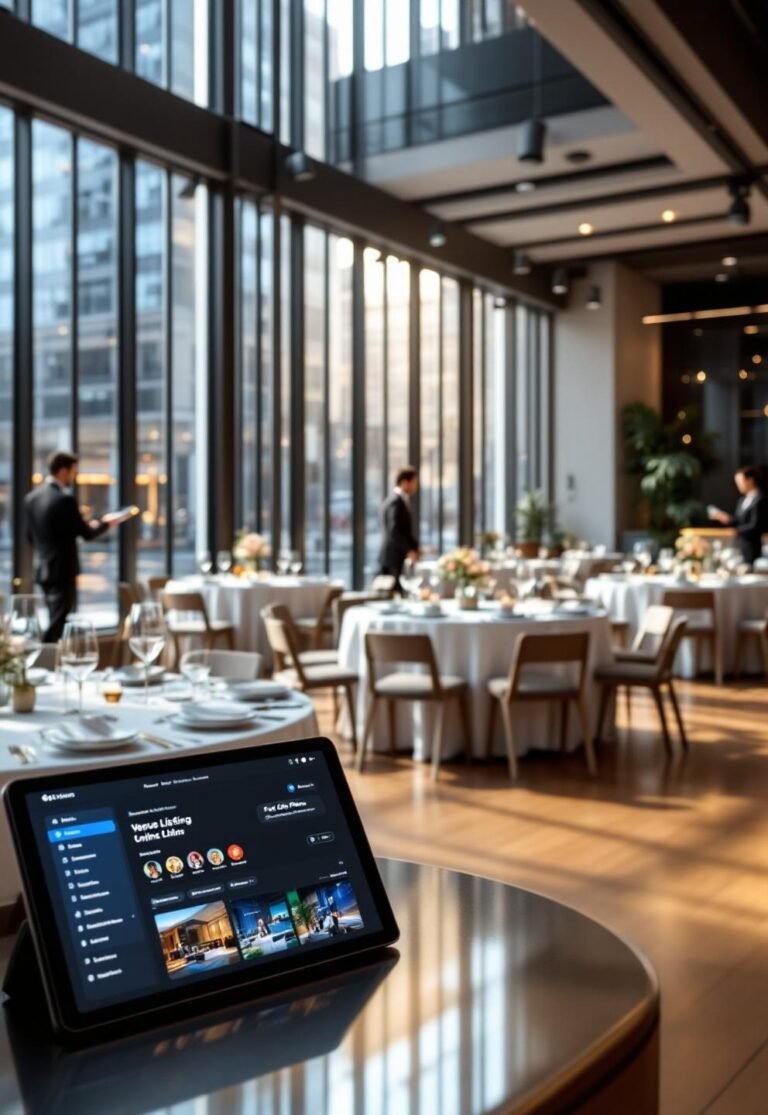
Do You Need a Venue Finding Service for Your Event?
Venue finding service event is no longer just a simple Google search. In 2026, venue sourcing is a strategic decision that decides the value, risk, and ROI of your entire event—whether you’re a corporate planner or a private host under the clock. This deep-dive unpacks how “free” venue sourcing really works, where the hidden costs and biases are, and when to partner with a venue agency to save time, reduce financial risk, and cut your net event spend.
Key Takeaways
- The venue is the single biggest event cost—sourcing it quickly and defensibly saves significant money and risk.
- “Free” venue finding isn’t always bias-free or cost-free; know how commissions, neutrality, and hidden fees work.
- Engage a venue sourcing agency early (3-12+ months out depending on event type) to secure leverage, selection, and bottom-line value.
- What a Venue Finding Service Actually Does
- Running Your Venue Search: Brief, Budget, Shortlist
- The Catch With “Free” Services: DIY vs Agency Compared
- Engage Early and Demand Commission Transparency
- FAQ
What a Venue Finding Service Actually Does
Venue finding today is about more than just locating a space. With the global meetings and events market valued at $1.24 trillion in 2025 and over 38% of that spend tied directly to venue rental (DataIntelo), where and how you source your venue shapes your entire project’s cost and risk exposure.
A modern venue finding service event acts as your procurement ally. For corporate event managers with 50–500 attendees or couples planning a unique wedding, the real obstacle isn’t a lack of spaces—it’s information overload, hidden costs, and compressed timelines. A venue sourcing agency brings speed, market intelligence, benchmarking, and contract experience to the table, letting you focus on the content and purpose of your event—not chasing quotes or worrying about fine print.
If you’re just starting your journey, check the event inspiration ideasWireless RGB LED uplight kit (DMX-capable ambient lighting) page or the Eventory blog to gather concepts. Corporate planners looking for full frameworks should consider the Ultimate Event Planning Guide for step-by-step best practices.
Running Your Venue Search: Brief, Budget, Shortlist
Step 1: Define your brief and constraints
List your event’s core outcomes, non-negotiables, and budget parameters upfront. Document headcount, preferred dates (plus flexibility), AV/tech needs, and any sustainability or accessibility requirements. Use a tool like the plan your event wizard to structure your brief.
Step 2: Set the initial budget
Venue rental typically absorbs 35–40% of total event costs. Use the event budget calculator to scenario the best-fit venue spend compared to overall budget. For catering and F&B add-ons, run numbers through the event catering calculatorStainless steel chafing dish buffet set (for catering and hot food service) early while you shortlist spaces that include or require bundled F&B minimums.
Step 3: Shortlist venues with agency/AI help
Use a venue sourcing service for curated, AI-powered shortlists. Input your criteria and demand transparency: ask for the commission % range and conflict-of-interest policy. Prioritize platforms listing 10,000+ spaces like Tagvenue or Cvent Supplier Network (Tagvenue 2026 Trends), or request a venue agency with local knowledge and independent negotiation power.

Step 4: Run standardized RFP and evaluation
Provide a clear, standardized RFP to top 3–5 venues. Have your agency handle response collection, non-standard clauses, and negotiation points. Ask for yield management insights: can moving your date or format trim high-season surcharges of 15–25% (Naboo Pricing Guide 2026)?
Step 5: Contracting, risk mitigation, and final decision
Carefully review all terms: cancellation windows, deposit rules, commission impacts, and data usage clauses. If you’re using a commission-based service, check exactly what contract risk sits with you versus the venue or agency. Leverage product reviews and feedback on venue reliability, tech, and accessibility where available—see Eventory’s product reviews for vetted insights on AV, furniture, and decor options.
The Catch With “Free” Services: DIY vs Agency Compared
While free or hybrid agency models are everywhere now, transparency and true neutrality remain rare. Here’s what breaks down most often in real-world venue searches—and what to watch for.
Major Risks When Relying Solely on “Free” Venue Finding Services
- Hidden Commission Bias: Service often steers you toward venues paying higher commissions or ones with preferred supplier status, not always true “best fit.”
- Partial Service Scope: Basic introductions may be free, but vital elements (layout analysis, risk vetting, contract advice) are paywalled or absent. Clarify up front.
- Opaque Liability and Contract Paths: Are you contracting direct, or is the agency an introducer or reseller? This changes your exposure on refunds and force majeure.
- Missed Value Opportunities: Without benchmarking, you may pay Q4 or high-season premiums (often 15–25% extra) that skilled negotiators routinely offset by shifting dates or adding bundled AV/catering.
- Unvetted Information: Many platforms have limited mechanism for independent user reviews or verification. The product reviews and event inspiration channels spotlight real, actionable experience.
Comparison Table: DIY vs Agency Venue Sourcing (2026)
| Approach | Speed | Cost (Direct) | Net Value/Negotiation | Risks |
|---|---|---|---|---|
| DIY Search | Slow (weeks on RFPs) | Hidden (planner salary/time) | Low (weak leverage, delayed booking can cost more) | High (layout mismatches, contract/fee blind spots) |
| Free/Commission-Funded Agency | Fast (2–5 days to shortlist) | Typically zero (venue pays 8–15% commission) | High (can dodge high-season surcharges, secure concessions) | Moderate (potential commission bias, undisclosed |
| Paid/Hybrid Agency | Fastest (priority access, custom vetting) | 5–10% of total budget or flat fee | Highest (full negotiation, detailed risk and ROI strategy) | Low (full transparency, direct contractual clarity) |
- Always demand full disclosure on commission structures, fee triggers, and neutrality policies before you sign. Use a buyer’s checklist (commission % disclosed, data use clarified, contract paths explained) as suggested by sector studies (Peerspace Analysis).
- Review conference venue or wedding venue checklists for specialized events.
- For novel layouts, tech needs, or complex logistics, lean on independent event decorator and setup guides.

Engage Early and Demand Commission Transparency
Sourcing the perfect venue is the biggest—and often riskiest—event decision you’ll make. A transparent, commission-aware venue finding service event transforms venue selection from a guessing game into a strategic, iterative process. Engage your agency or technology partner as early as possible, arm yourself with budget and headcount data, and demand transparency at every step—especially on commissions, contract, and data use.
Ready to source with confidence? Start by using the event budget calculator or download the full Ultimate Event Planning Guide for a tactical gameplan. For ongoing tips, ideas, and event case studies, check the Eventory blog.
FAQ
How does a “free to client” venue finding service make money?
Most free venue finding services are funded by commissions paid by the venues, usually 8–15% of room hire or event spend after a confirmed booking. This cost is typically absorbed as part of the venue’s sales budget and is not added directly to your bill.
Are recommendations from venue sourcing agencies truly unbiased?
Not always. Some agencies may favor venues offering higher commissions or those on preferred supplier lists. Always ask for bias disclosures, commission % ranges, and conflict-of-interest policies when evaluating an agency.
When should I engage a venue finding agency for best results?
For corporate events during peak demand, start 6–12 months out; for top wedding venues, 12–18 months is best. If you’re flexible, 3–6 months (corporate) or 6–9 months (wedding/social) may suffice, but selection and pricing power decrease with a shorter lead time.
How do I ensure contract and liability clarity?
Always request in writing whether contracts are direct with the venue or via the agency, and review all terms (cancellation, force majeure, data use). Lean on the agency for clarification or consider a paid model if your needs are complex.
What extra value does an agency add for negotiation?
Agencies benchmark local rates, identify off-peak savings, and negotiate concessions (bundled AV, reduced attrition). For major events, these gains often surpass any commission or fee.