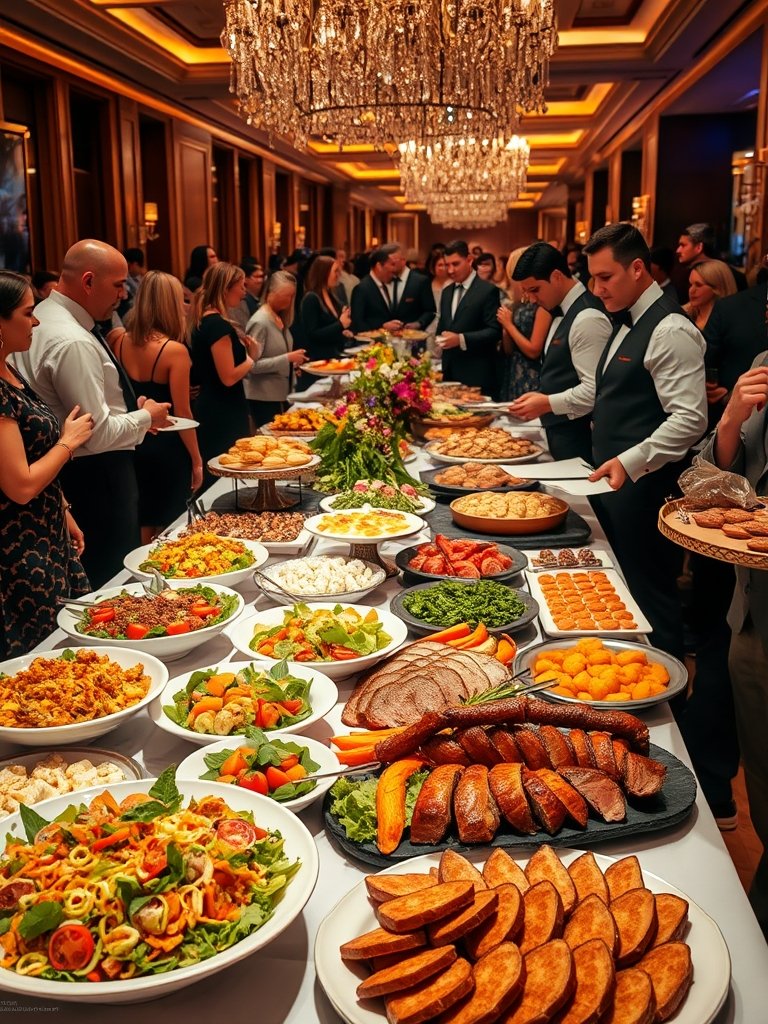
Event catering: choose a service style, plan quantities and brief a caterer

Catering usually takes the largest single share of an event budget, and it shapes the whole evening: how long guests stay seated, how the room is laid out, how many staff you need and even what time the speeches can start. Yet many organisers choose a menu before they have decided how the food will actually be served. This guide works in the right order: pick a service style, estimate quantities, plan for dietary needs, then brief and compare caterers.
Step 1: Choose the service style first
The service style decides cost, staffing, space and atmosphere more than the menu does. The main options:
| Style | Works best for | Trade-offs |
|---|---|---|
| Plated (served at table) | Weddings, gala dinners, award nights | Most staff per guest; needs firm timings and a seating plan; least flexible for late changes |
| Buffet | Parties, conferences, informal weddings | Fewer servers, more choice; queues and higher food waste if quantities are not controlled |
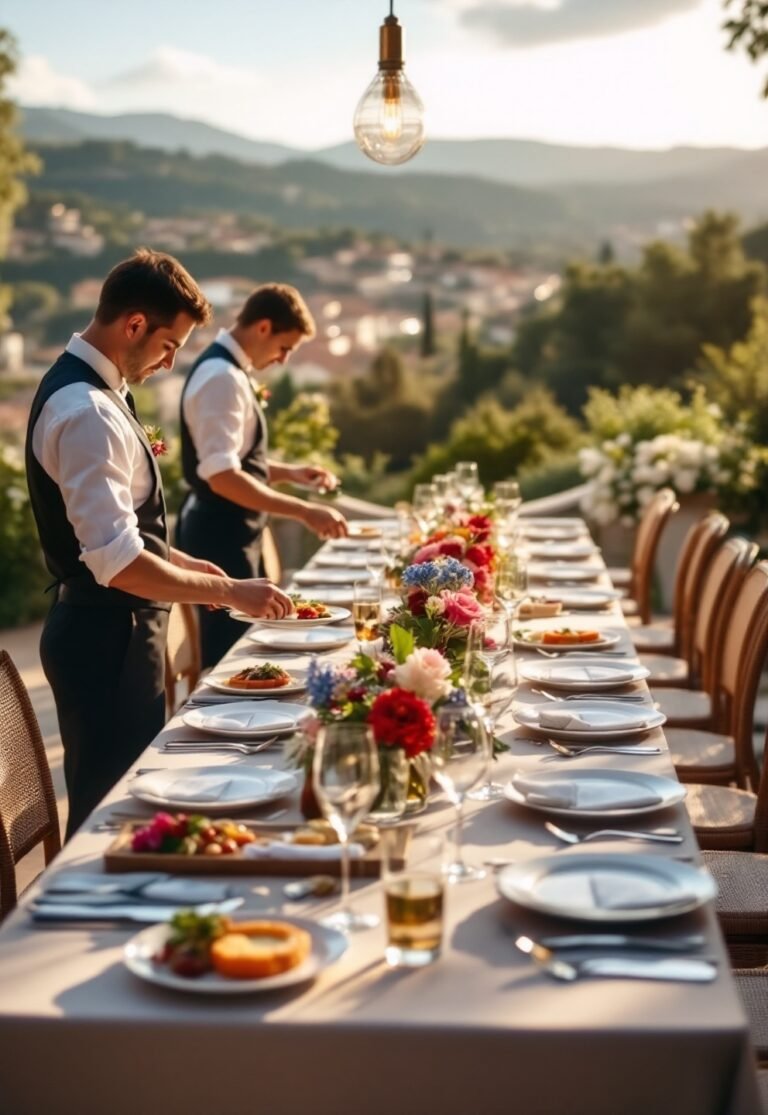
| Family style (sharing platters) | Relaxed weddings, team dinners | Sociable; needs wide tables and extra serving ware |
| Food stations | Large parties, networking events | Keeps guests moving; needs floor space and one chef or server per station |
| Canapés / standing reception | Launches, drinks receptions, short events | No tables needed; guests must be told it replaces a meal, or they leave hungry |
| Boxed or drop-off | Workshops, working lunches | Cheapest and simplest; little presentation or service |
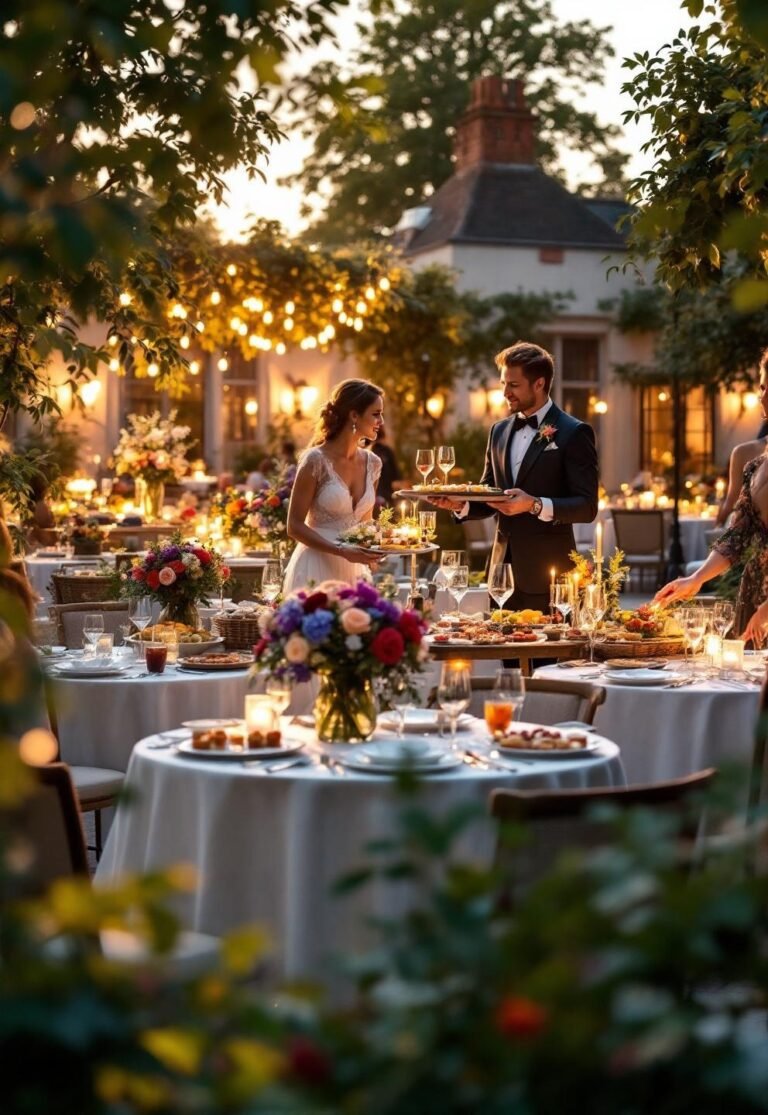
A quick test: if the event has a fixed programme (speeches, awards, a first dance), plated or family style keeps everyone in one place. If people should mingle, choose stations or canapés.
Step 2: Estimate quantities realistically
Caterers will calculate final quantities, but you need ballpark numbers to judge whether quotes make sense. Common planning figures used across the industry:
- Canapés before a meal: 3–5 pieces per guest for a 45–60 minute reception.
- Canapés instead of a meal: 10–14 pieces per guest over two to three hours, including some substantial “bowl food”.
- Buffet main course: roughly 150–200 g of protein and 2–3 side portions per adult.
- Drinks: about one drink per guest per hour after the first hour, which is usually heavier; plan plenty of water and soft drinks.
- Staff: as a rule of thumb, one server per 10–12 guests for plated service, one per 20–30 for a buffet, plus bar staff.
Confirm final numbers with the caterer, as appetites vary with the time of day, the length of the event and the guest mix.
Step 3: Plan for dietary needs from the start
Ask about dietary requirements on the invitation or registration form, not a week before. Record the guest’s name, the requirement and whether it is a preference or an allergy. For allergies, ask caterers how they prevent cross-contamination, how dishes will be labelled, and whether their staff can tell guests what is in each dish. In the UK and EU, caterers must be able to provide information on 14 major allergens, so a professional supplier should answer these questions easily.
Aim for dishes that suit several groups at once, for example a vegetarian main that is also gluten-free, rather than many one-off meals. It simplifies the kitchen and avoids guests feeling singled out.
Step 4: Write a short catering brief
A clear one-page brief gets you comparable quotes. Include:
- Date, venue, start and end time, and when food should be served.
- Guest numbers (expected and maximum) and the age mix if children attend.
- Service style and number of courses.
- Dietary requirements known so far.
- Venue facilities: kitchen or none, power, water, access and loading times.
- What you need them to supply: crockery, linen, furniture, bar, staff.
- Your budget per head, or the total budget.
If you have not set a budget yet, our guide to building an event budget that survives real quotes shows how to allocate catering alongside venue, decor and entertainment.
Step 5: Compare quotes like for like
Catering quotes often look different because suppliers include different things. Check each one for:
- Price per head and what it includes (food only, or staff and equipment too).
- Staffing: number of staff, hours and any overtime rate.
- Equipment hire: crockery, glassware, linen, chafing dishes.
- Service charge and VAT or sales tax.
- Venue fees: some venues charge a fee for outside caterers or require a caterer from their approved list. Our guide to reading a venue quote explains these charges.
- Tasting: whether one is included and for how many people.
- Deadlines: when final numbers are due and the cancellation policy.
Questions to ask before you book
- Have you worked at this venue before? If not, will you do a site visit?
- Can you show food hygiene ratings or certificates and public liability insurance?
- How do you keep hot food hot and cold food cold if there is no kitchen?
- What happens to leftover food? Can it be packed or donated?
- Who will be the lead contact on the day?
Presentation without overspending
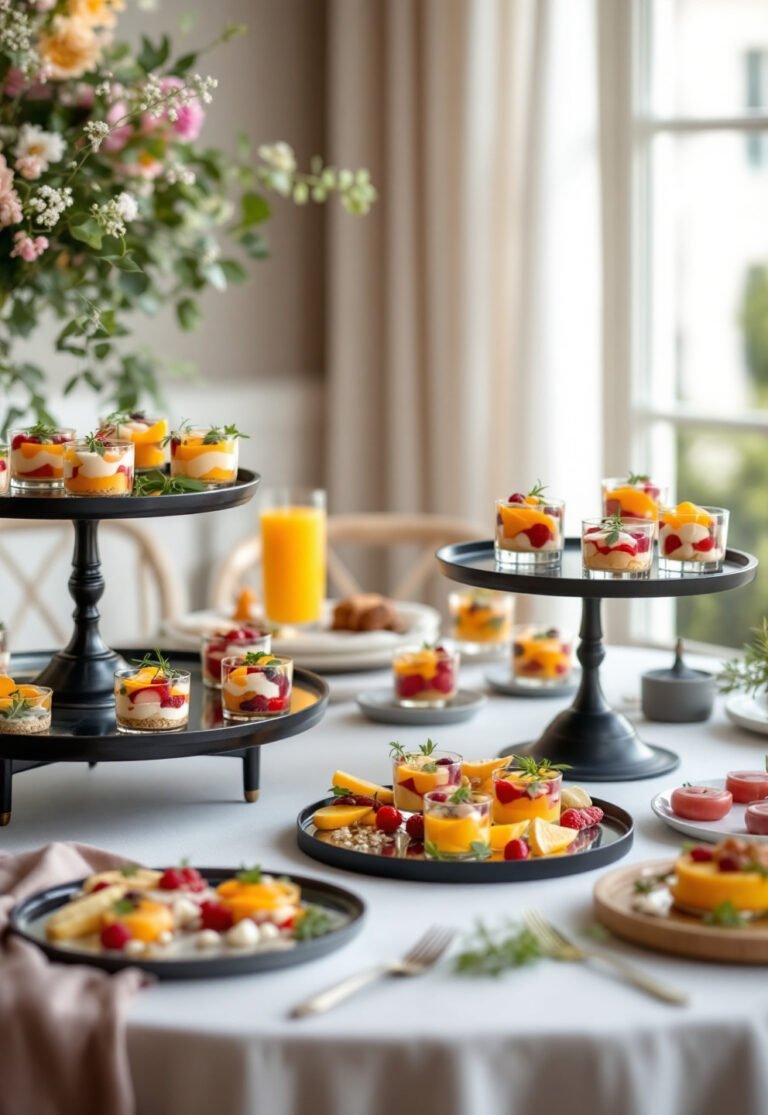
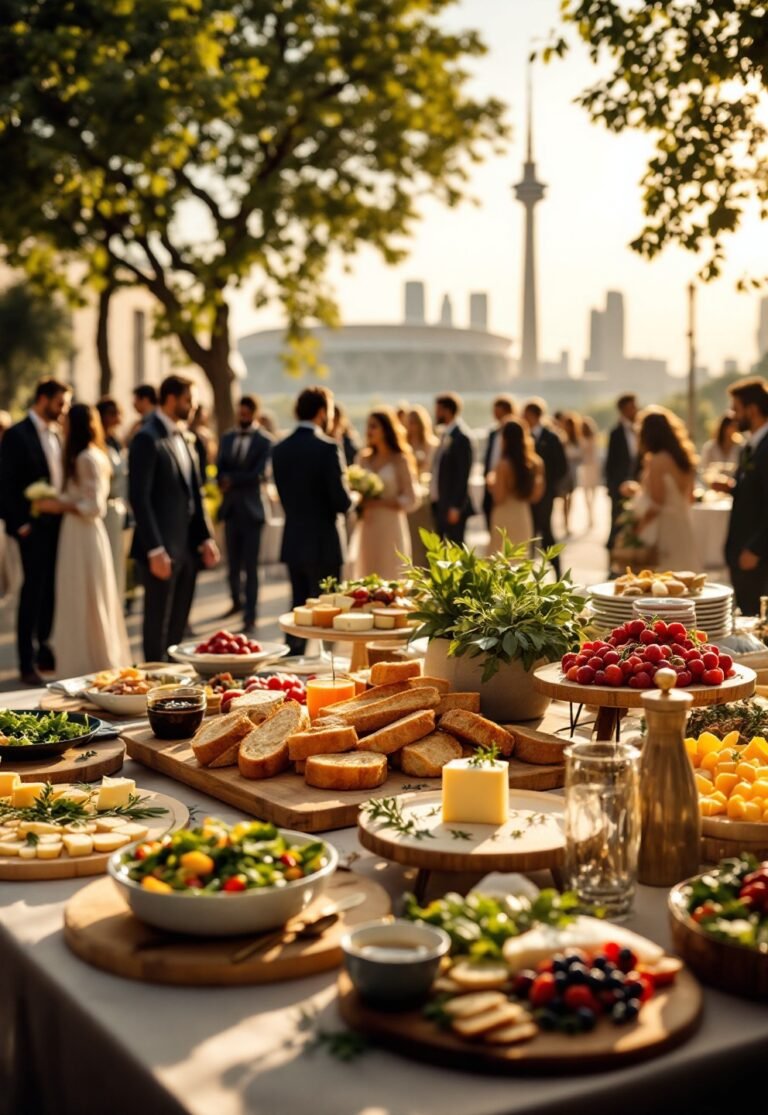
Guests notice how food looks, but presentation does not have to mean expensive extras. Height on a buffet (cake stands, crates, risers), good lighting and a few fresh herbs or flowers do most of the work. For ideas that suit adult parties, see our guide to buffet decoration.
A simple timeline
- 4–6 months before: choose service style, set the budget, request quotes.
- 3 months: book the caterer, pay the deposit, schedule a tasting.
- 4–6 weeks: confirm menu and dietary needs; agree the running order.
- 1–2 weeks: final guest numbers, table plan and allergy list to the caterer.
- On the day: one named contact for the caterer, and a printed timeline for the venue.
Worked example: a 120-guest evening party
A company is planning a 120-guest summer party from 6 p.m. to 11 p.m. in a converted warehouse with no kitchen. They want people to mingle, so they rule out plated service and choose a drinks reception with canapés, followed by three food stations (a grill, a vegetarian mezze table and a dessert bar).
- Canapés: 4 per guest during the first hour, about 480 pieces.
- Stations: sized for a full meal, with each station able to serve the whole room in about 40 minutes.
- Staff: two chefs and two servers on the stations, four roaming canapé servers, and three bar staff.
- Kitchen: because the venue has none, the caterer quotes for a temporary prep tent, extra power and hand-wash stations. These add a significant amount to the bill and are easy to miss when comparing quotes.
- Dietary needs: 14 vegetarians, 3 vegans, 2 coeliacs and 1 nut allergy collected at registration and sent to the caterer two weeks before.
Laying the plan out this way lets the organiser ask three caterers to quote on exactly the same basis, so the cheapest quote is genuinely cheaper rather than simply missing the prep tent.
FAQ
Is a buffet cheaper than a plated meal?
Often slightly, because it needs fewer staff, but buffets can use more food to avoid running out. Ask for both prices; the gap is sometimes smaller than expected.
How far in advance should I book a caterer?
For weddings and peak-season dates, six to twelve months ahead. For smaller corporate events, two to three months is often enough.
Should children have a separate menu?
For under-12s, a simpler, smaller menu usually reduces both cost and waste. Ask the caterer for a child price.